

Market Focus: US Inflation and the ECB Put Monetary Policy Back at Center Stage
Global markets enter the second week of September with inflation, central-bank policy and energy risks firmly in focus.
Following last week’s attention on the US labor market, the focus now shifts to August US CPI and PPI, the final major inflation releases before the Federal Reserve’s September 16 policy decision. With Fed Chair Kevin Warsh indicating at Jackson Hole that more consistent disinflation may be needed to avoid further tightening, the data could play an important role in shaping expectations for the next policy move.
At the same time, energy markets remain a major source of uncertainty. Investors will continue to monitor tanker traffic through the Persian Gulf following renewed US-Iran strikes, with disruptions to regional energy supplies posing an upside risk to inflation and global bond yields.
In Europe, the ECB rate decision takes center stage, while China’s trade and inflation figures, UK GDP and Japanese wages and producer prices will provide additional signals on global growth and inflation.
US: CPI Is the Final Major Test Before the Fed
The main US event will be the August CPI report, one of the last major pieces of economic data ahead of the Fed’s September meeting.
Headline consumer prices are expected to rise 0.4% month-on-month, accelerating from 0.1% in July, while core CPI is forecast to increase 0.2%. A stronger-than-expected reading would reinforce concerns that disinflation remains uneven and could strengthen the case for further tightening.
Producer prices will provide another important inflation signal. Both headline and core PPI are expected to increase 0.3%, adding to the week’s focus on whether price pressures are rebuilding further up the supply chain.
The inflation releases are particularly important following Warsh’s Jackson Hole message that the FOMC may need to consider additional tightening unless month-to-month disinflation becomes more consistent. Markets will therefore be watching whether August data validate the recent rise in rate expectations or provide the Fed with greater room to remain on hold.
The preliminary University of Michigan Consumer Sentiment Index, inflation expectations and existing home sales will provide additional insight into household conditions, while larger Treasury buybacks of longer-dated securities will keep attention on the long end of the yield curve.
On the corporate side, earnings from Oracle and Adobe will keep technology and AI investment themes in focus.
Europe: ECB Faces Renewed Inflation Pressure
The ECB’s monetary-policy decision will dominate the European calendar, with markets expecting a 25-basis-point rate increase, taking the deposit rate to 2.5%.
The decision follows renewed signs of inflation pressure across the region. Investors will pay particular attention to the ECB’s guidance on whether the move represents a further step in the tightening cycle or whether policymakers see current rates as sufficient to contain inflation.
Growth indicators will also matter. Germany’s industrial production is expected to increase 0.3%, while final August inflation and trade data will provide further evidence on conditions in Europe’s largest economy.
In the UK, July GDP is expected to stagnate, while industrial production is forecast to recover modestly. Together with trade and housing data, the releases should provide a clearer picture of whether UK activity is losing momentum.
Monetary-policy decisions are also due from Russia and Poland, adding to a busy week for European central banks.
Asia-Pacific: China Trade and Inflation Meet Renewed Tariff Pressure
China will publish August trade and inflation data against a backdrop of renewed US tariffs and continued questions over domestic demand.
The trade surplus is expected to widen, while CPI inflation is forecast to accelerate to 0.9% from 0.5%. The combination of trade flows and domestic prices should provide useful evidence on how the economy is responding to both external trade pressure and internal demand conditions.
Japan also faces a busy calendar. Revised Q2 GDP, wages, the current account and producer prices are due, with August PPI expected to show producer inflation accelerating to 7.4%. Wage and price developments will be particularly important for assessing the outlook for Bank of Japan policy.
Taiwan’s trade figures will also be worth watching as a potential signal of global semiconductor and AI infrastructure demand.
What Investors Should Watch
Will US Inflation Give the Fed a Reason to Hike?
August CPI and PPI are the final major inflation tests before the September Fed decision. A renewed acceleration in prices could strengthen the argument for further tightening, while softer readings would support a more cautious approach.
Is Europe Entering Another Tightening Phase?
The ECB is expected to raise rates by 25 basis points. More important than the hike itself will be whether policymakers signal that persistent inflation could require additional action.
3. Can Energy Risks Disrupt the Disinflation Story?
Persian Gulf tanker traffic and developments in the US-Iran conflict remain critical. A prolonged disruption to regional energy supplies could keep oil prices elevated, feed into inflation and maintain upward pressure on global yields.
Global Equities: Strong US Jobs Data Revive Rate-Hike Concerns
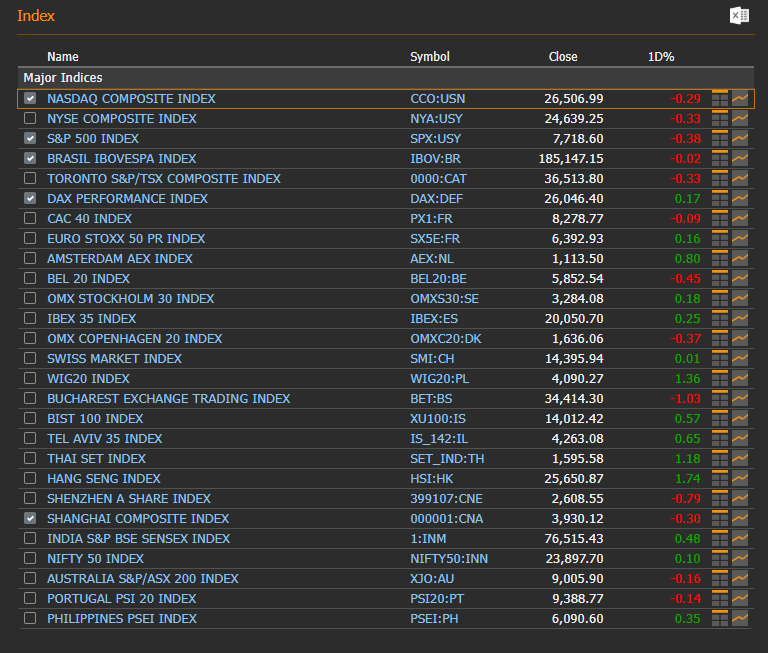
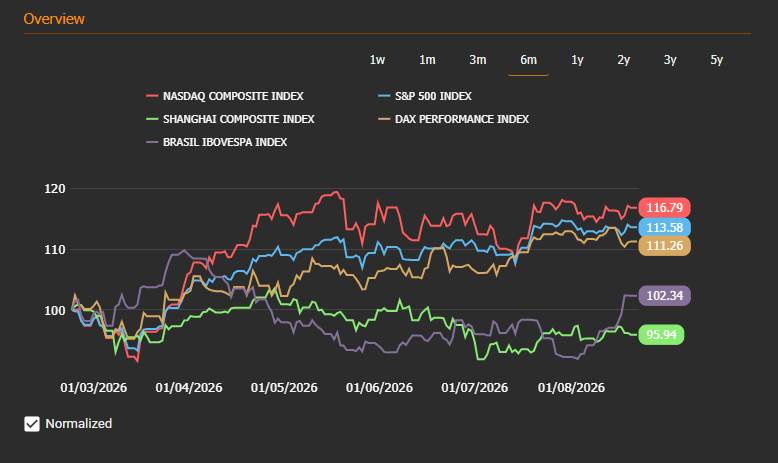
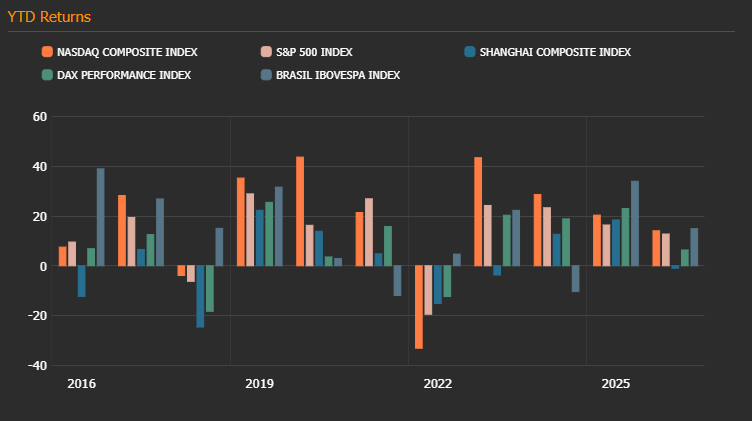
Global equity markets ended the week on a mixed note as stronger-than-expected US employment data reinforced the resilience of the economy but revived expectations that the Federal Reserve could raise interest rates in September. The jobs surprise pushed Treasury yields and the US dollar higher on Friday, tempering risk appetite after equities had recovered from weakness earlier in the week.
US equities slipped on Friday but remained close to record territory. The S&P 500 fell 0.38%, the Nasdaq Composite declined 0.29% and the Dow lost 0.51% after August nonfarm payrolls rose by 162,000, substantially exceeding expectations. The stronger labor-market reading increased market pricing for a September Fed rate increase, putting renewed pressure on rate-sensitive parts of the market. Despite Friday's decline, the S&P 500 still finished the week with a small gain and remained around 1% below its mid-August record high.
Technology performance was more resilient than the broader market, with semiconductors gaining on Friday even as the major indices declined. This suggests that the AI investment theme continues to provide support, although elevated Treasury yields remain an important valuation constraint for growth stocks. The broader market backdrop has increasingly become a balance between strong corporate and economic fundamentals and the possibility that resilient growth will keep monetary policy restrictive for longer.
European equities were comparatively resilient on Friday but ended the week lower. The DAX and Euro STOXX 50 posted modest gains in the final session.
Asian markets remained mixed, with a particularly clear divergence between Hong Kong and mainland China. The Hang Seng gained 1.74% on Friday, while the Shanghai Composite fell 0.30% and the Shenzhen A-share index declined 0.79%.
Source: EquityRT Markets Overview. Data as of 04/09/2026
Commodity Markets: Oil Surges as Middle East Tensions Intensify, Gold Retreats
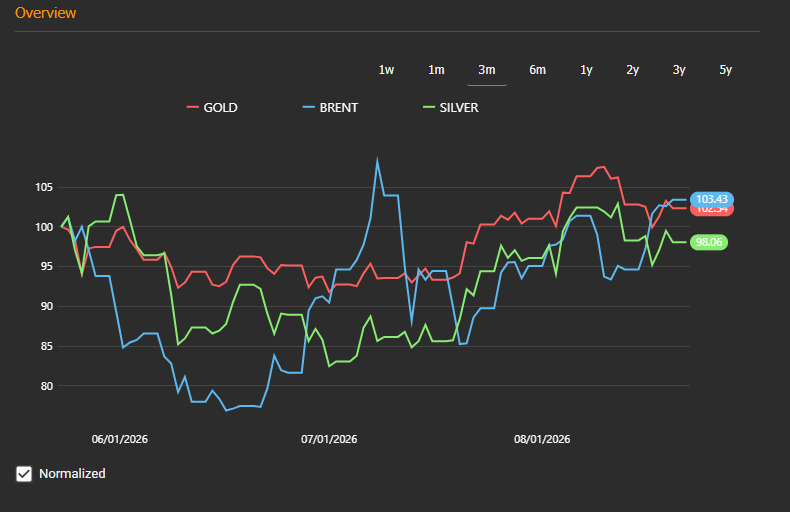
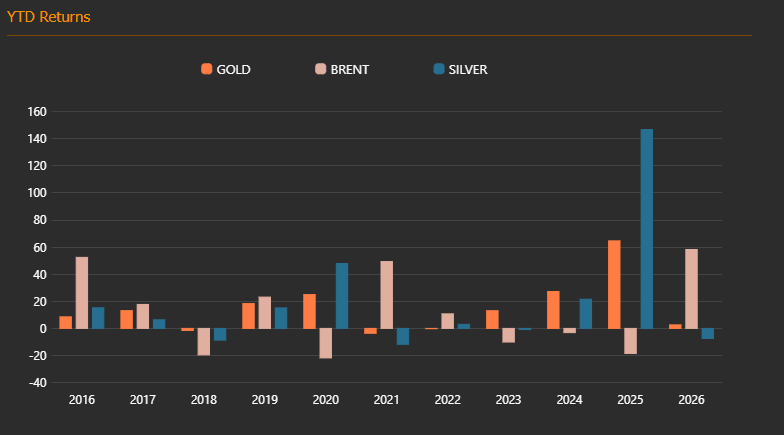
Commodity markets were shaped by a renewed escalation in geopolitical and inflation risks during the week, with oil prices surging as fresh US-Iran strikes raised concerns over Middle East supply disruptions, while precious metals came under pressure from higher Treasury yields and a stronger US dollar.
Brent crude gained 7.6% over the week, reversing the previous week's decline and recording its strongest weekly advance since mid-July. Renewed military exchanges between the US and Iran brought supply risks back to the forefront, while shipping through the Strait of Hormuz remained severely restricted.
Gold moved in the opposite direction, retreating during the week as higher Treasury yields and a stronger dollar outweighed safe-haven demand. Bullion fell more than 2% on Tuesday to a two-week low as the US 10-year Treasury yield climbed to a 19-month high. Selling intensified on Friday after stronger-than-expected US payrolls increased expectations of a September Fed rate hike, with spot gold falling 1.2% to around $4,419 per ounce.
Silver also came under pressure, falling alongside gold on Friday as stronger US employment data lifted rate expectations. Its longer-term industrial-demand story remains relevant, but in the near-term precious metals are increasingly sensitive to movements in the dollar and US yields.
Source: EquityRT Commodity Overview. Data as of 04/09/2026
Yield Curve Watch: Strong Jobs Data Keep Yields Elevated as Fed Hike Bets Rise
US Treasury yields remained under upward pressure during the week as stronger economic data, renewed inflation concerns and persistent fiscal risks reinforced expectations that interest rates could remain elevated. The selloff formed part of a broader move across global sovereign bond markets, with borrowing costs in several major economies reaching multi-year or multi-decade highs.
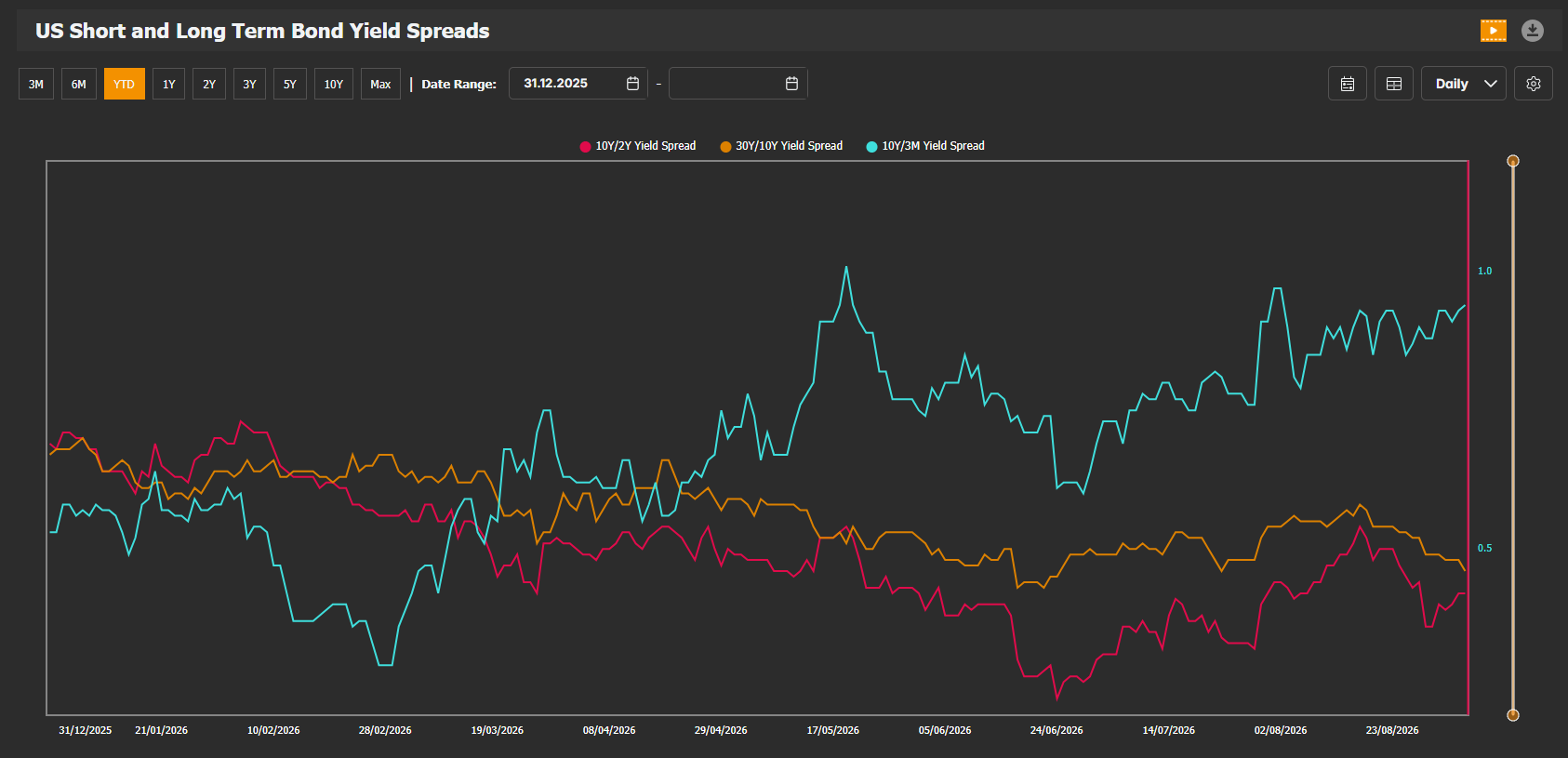
The 10Y-2Y spread remains relatively compressed at around 0.4 percentage points. The spread had narrowed sharply following Fed Chair Kevin Warsh's Jackson Hole remarks as expectations for additional tightening pushed short-term yields higher. That pressure continued Friday after the August employment report significantly exceeded expectations.
US payrolls increased by 162,000 in August, compared with the 56,000 consensus forecast, while unemployment remained at 4.1%. The 2-year Treasury yield rose around 5 basis points to 4.38% following the report as markets increased the probability of a September Fed hike to roughly 60%.
At the same time, the 10Y-3M spread remains close to the upper end of its 2026 range, at around 0.9 percentage points. Longer-term yields have remained elevated as investors price a combination of persistent inflation risk, resilient economic activity and concerns over government borrowing. The benchmark 10-year yield approached 4.8% during the week, while renewed US-Iran tensions and higher oil prices added another source of inflation uncertainty.
The 30Y-10Y spread has narrowed toward roughly 0.45–0.50 percentage points, but this should not be interpreted as an easing of pressure at the long end. Longer-maturity borrowing costs remain historically high, reflecting continued investor sensitivity to fiscal deficits, Treasury supply and inflation. Reuters noted that the broader rise in yields has increasingly become a concern for households, companies and equity valuations.
Source: EquityRT ChartPro, Data as of 04/09/2026
Gold vs DXY: Strong US Jobs Data Reinforce Dollar Rebound
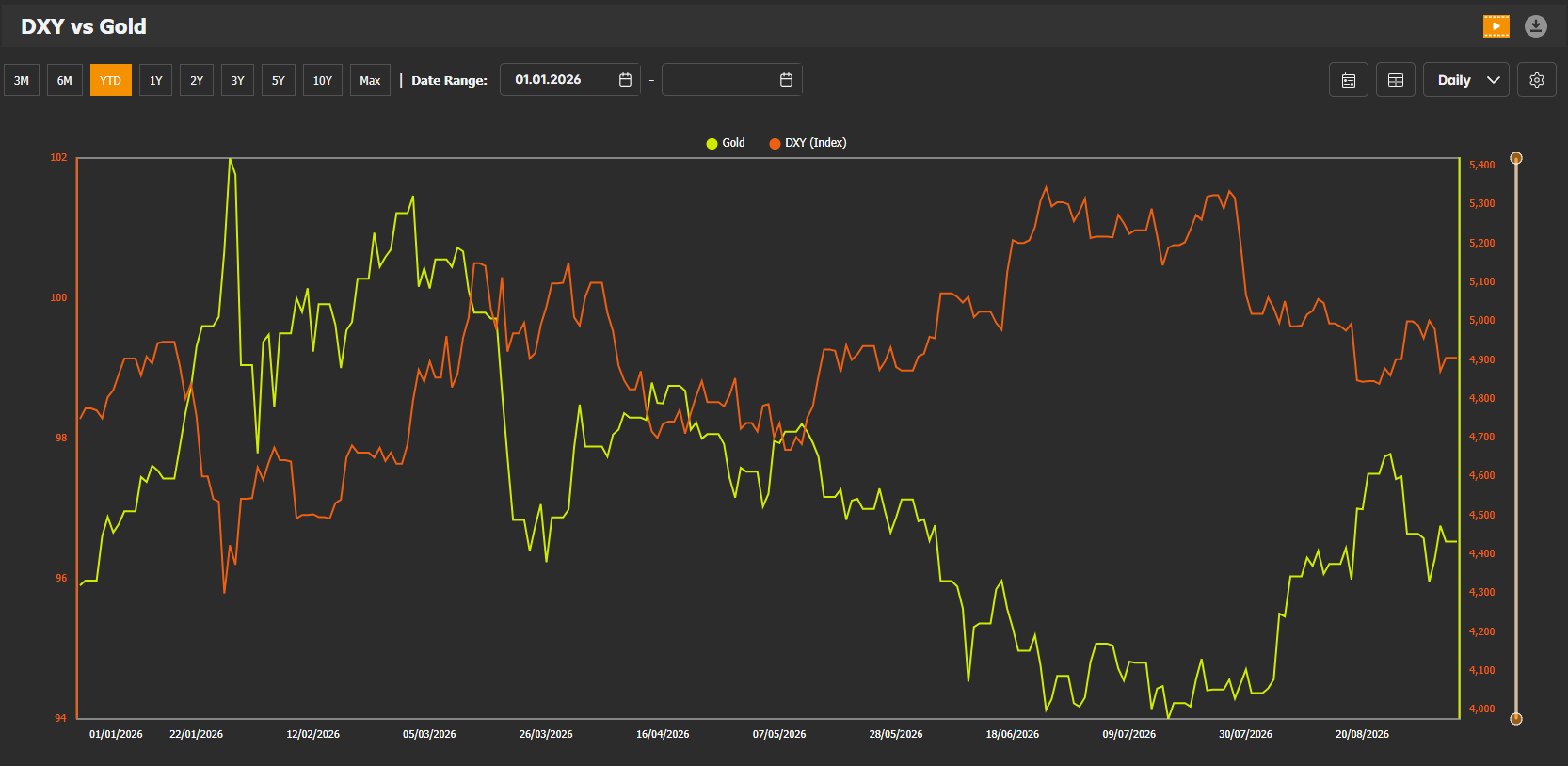
The inverse relationship between gold and the US dollar remained visible during the week, as stronger US economic data reinforced expectations for further Federal Reserve tightening and put renewed pressure on bullion.
Gold struggled to maintain its August recovery, retreating from the highs reached late last month. The metal came under pressure as US Treasury yields moved higher and the dollar regained ground, reducing the relative appeal of non-yielding assets. Earlier support from geopolitical uncertainty and concerns over US fiscal conditions was not enough to offset the shift in interest-rate expectations.
The key catalyst came from the August US employment report, which showed payroll growth substantially exceeding expectations. The stronger labor-market reading strengthened the view that the economy remains resilient enough to withstand tighter monetary policy and increased market expectations for a September Fed rate hike. Treasury yields moved higher in response, while the dollar strengthened.
The DXY consequently stabilized around the 99 level after its sharp August decline, while gold ended the week around the $4,400 area, well below its late-August peak above $4,600. The latest move reinforces the relationship visible in the chart: gold has tended to perform better when the dollar and US rate expectations weaken, but has struggled when higher yields and a firmer dollar raise the opportunity cost of holding bullion.
Source: EquityRT ChartPro, Data as of 04/09/2026
📈 Chart of the Week: Is Inflation Giving the Fed a Reason to Hike?
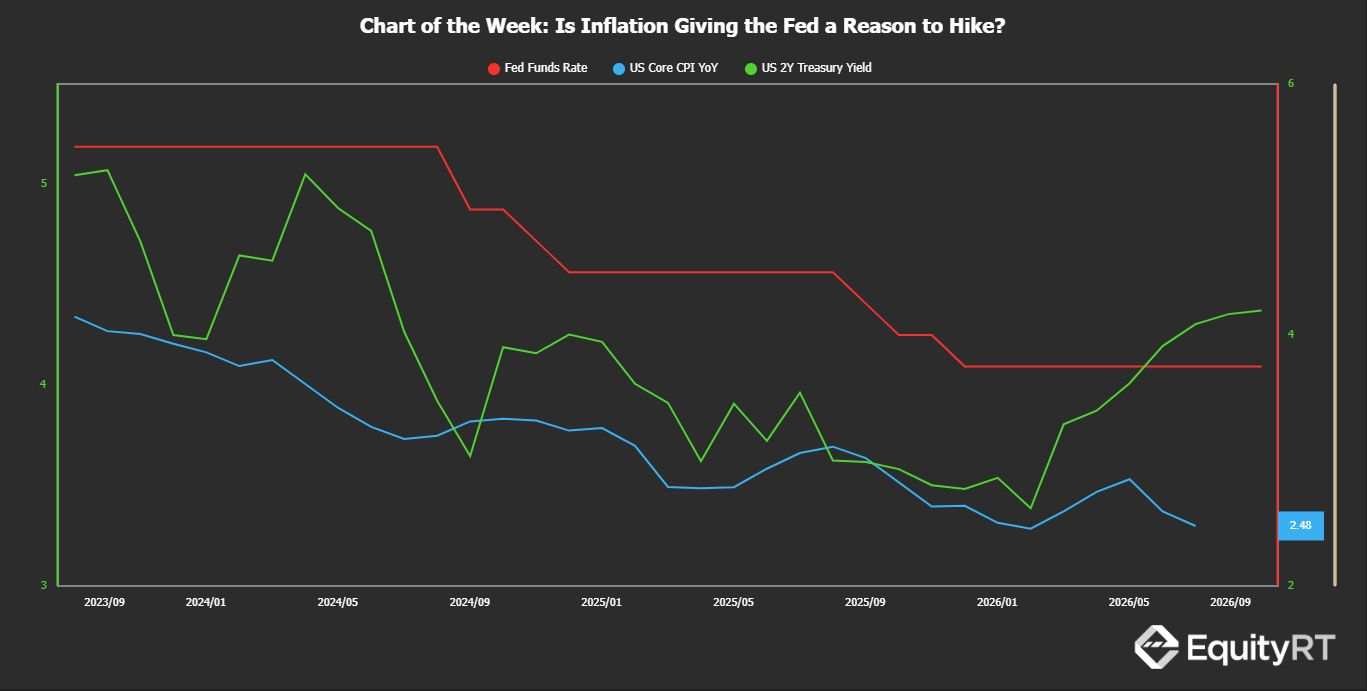
The Fed's next move may come down to inflation.
Core US inflation has continued to moderate, reaching 2.48% YoY, while the Fed Funds Rate stands at 3.75%. Yet the US 2-year Treasury yield has moved sharply higher in recent months as markets reassess the likelihood of further monetary tightening.
Following stronger-than-expected August employment data, attention now turns to US CPI and PPI, the final major inflation releases before the September Fed decision. A renewed acceleration in prices could strengthen the case for another rate hike, while softer inflation would challenge the recent rise in market yields.
The question for markets: will inflation confirm what the bond market is already beginning to price?
Source: EquityRT | Data through 04/09/2026