

Market Focus: US Jobs, Inflation and Global PMIs Take Center Stage
Global markets enter the week with US labor-market and inflation data, Eurozone consumer prices and global manufacturing PMIs firmly in focus. At the same time, developments involving the US, Iran and GCC countries will remain an important source of market risk.
The possibility of either diplomatic progress or further military escalation in the Middle East will be closely monitored, particularly as elevated energy prices and resilient economic activity have pushed global bond yields to multi-decade highs.
In the US, the September employment report, ISM manufacturing PMI and the Fed’s preferred PCE inflation indicators will provide fresh evidence on the strength of the economy and the interest-rate outlook. Several Fed officials are also scheduled to speak.
Meanwhile, preliminary inflation figures from the Euro Area and its largest economies will be released as markets price in multiple ECB rate increases during the current cycle. Elsewhere, China’s PMIs, the Bank of Japan’s Tankan survey and the Reserve Bank of Australia’s interest-rate decision will be among the week’s other major events.
US: Jobs and PCE Inflation Drive the Fed Debate
The US economic calendar is packed with labor-market, inflation and activity data that could shape expectations for the Federal Reserve’s next policy moves.
Friday’s non-farm payrolls report is expected to show that the economy added 100,000 jobs in September, down from 162,000 in August. The unemployment rate is forecast to rise slightly to 4.2% from 4.1%.
Earlier in the week, JOLTS job openings are expected to decline to 7.23 million in August from 7.27 million, while the ADP report is forecast to show an increase of 70,000 private-sector jobs in September. The figures will be assessed against the FOMC’s view that the labor market remains close to full employment.
Inflation data will be equally important. The headline PCE price index is forecast to increase by 0.4% month-on-month in August, while core PCE is expected to rise by 0.3%, accelerating from 0.2% in July. Personal spending is projected to increase by 0.8%, compared with 0.2% previously, while income growth is expected to remain at 0.4%.
The ISM manufacturing PMI is also forecast to indicate stronger activity in September. Other releases include factory orders, the advance goods trade balance, wholesale inventories, consumer confidence, the Case-Shiller home price index, Chicago PMI and the final estimate of second-quarter GDP.
Several Fed officials are scheduled to speak, while earnings announcements from Micron Technology and Nike will provide further insight into consumer demand and the outlook for the technology sector.
Elsewhere in the Americas, investors will monitor Canadian GDP, Brazilian unemployment and industrial production, Mexico’s trade balance and business confidence, and manufacturing PMIs across the region.
Brazil’s October 4 presidential election will also move into focus, with markets closely following opinion polls as the contest between incumbent President Lula da Silva and Flávio Bolsonaro remains tight.
Europe: Inflation Data Test ECB Rate Expectations
Preliminary inflation readings from the Euro Area and its largest economies will dominate the European calendar as investors assess the potential scale of further ECB tightening.
Eurozone annual inflation is expected to accelerate to 3.5%, its highest level since September 2023. Core inflation is forecast to remain at 2.6%, matching the 13-month high recorded in May.
Germany, France, Italy and Spain will also release flash inflation figures. Stronger-than-expected readings could reinforce market expectations for multiple ECB rate increases, particularly as higher energy prices continue to affect the regional inflation outlook.
Euro Area unemployment is expected to remain at 6.4% for a third consecutive month. Germany’s unemployment rate is also forecast to hold at 6.4%, its highest level since 2020. Manufacturing PMIs from Italy and Spain are expected to indicate that industrial activity is beginning to stabilise.
Other releases include the Euro Area business survey, German retail sales and unemployment figures from France, Italy and Spain.
In the UK, investors will monitor final second-quarter GDP and business investment figures, house-price indicators and Bank of England mortgage data.
Asia-Pacific: China PMIs, BOJ Tankan and RBA Decision in Focus
China’s September PMIs will provide an important assessment of the economy ahead of the National Day holiday period.
Both the official NBS surveys and the RatingDog PMIs are expected to point to a modest improvement in manufacturing and services activity. August industrial profits will also be released. Chinese markets will be closed from October 1 to October 7 for the National Day holidays, shortening the trading week.
In Japan, investors will examine the Bank of Japan’s Summary of Opinions from its September meeting, at which two policymakers dissented from the decision on the policy rate.
Industrial production is expected to have rebounded by 1.7% in August, while annual retail-sales growth is forecast to slow to 3.3%. The Tankan survey is expected to show an improvement in sentiment among large manufacturers, with the outlook index forecast to rise to 22.
Japan’s unemployment rate is likely to remain at 2.4%, while Tokyo core inflation is expected to accelerate to 2.4% from 1.8%.
In Australia, the Reserve Bank is widely expected to raise its policy rate by 25 basis points to 4.60%, supported by elevated inflation, solid economic growth and a resilient labor market. Australia will also release August inflation, building approvals, private-sector credit and trade data.
South Korea’s trade figures will be closely followed for new signals on global semiconductor demand and the AI investment cycle. Regional inflation and trade data are also due from Indonesia, Vietnam and the Philippines, while Vietnam will publish its third-quarter GDP figures.
Manufacturing PMIs will be released across Indonesia, Malaysia, the Philippines, Singapore, South Korea, Taiwan, Thailand and Vietnam.
What Investors Should Watch
1. Is the US Labor Market Beginning to Lose Momentum?
September payroll growth is expected to slow to 100,000, while unemployment could rise to 4.2%. The employment report, JOLTS figures and ADP data will help determine whether the labor market remains consistent with the Fed’s assessment of full employment.
2. Will Inflation Reinforce Expectations of Further Rate Increases?
US PCE inflation and preliminary Eurozone consumer-price figures will be critical for global rate expectations. Persistent inflation—particularly if accompanied by resilient consumer spending—could strengthen the case for additional monetary tightening.
3. Can Global Growth Withstand Higher Energy Prices and Bond Yields?
ISM and manufacturing PMI reports across the US, China, Europe and Asia will provide timely evidence on the strength of global activity. Resilient growth could support risk assets but also keep inflation and interest-rate expectations elevated.
4. Will Middle East Diplomacy Contain Energy-Market Risks?
Potential diplomatic agreements or escalatory strikes involving the US, Iran and GCC countries will remain a major market catalyst. Any disruption to regional energy supplies could place further upward pressure on oil prices, inflation expectations and global bond yields.
Global Equities: AI Optimism Supports Markets Despite Elevated Oil Prices and Bond Yields
Global equities ended Friday mostly higher as renewed optimism around artificial intelligence and hopes for progress in US-Iran negotiations helped offset concerns over elevated oil prices, persistent inflation and multi-decade highs in government bond yields.
US Treasury yields edged lower on Friday after reaching fresh multi-decade highs earlier in the week. However, the 10-year yield remained elevated at around 5.17%, while Brent crude stayed above $100 per barrel, maintaining pressure on inflation and global interest-rate expectations.
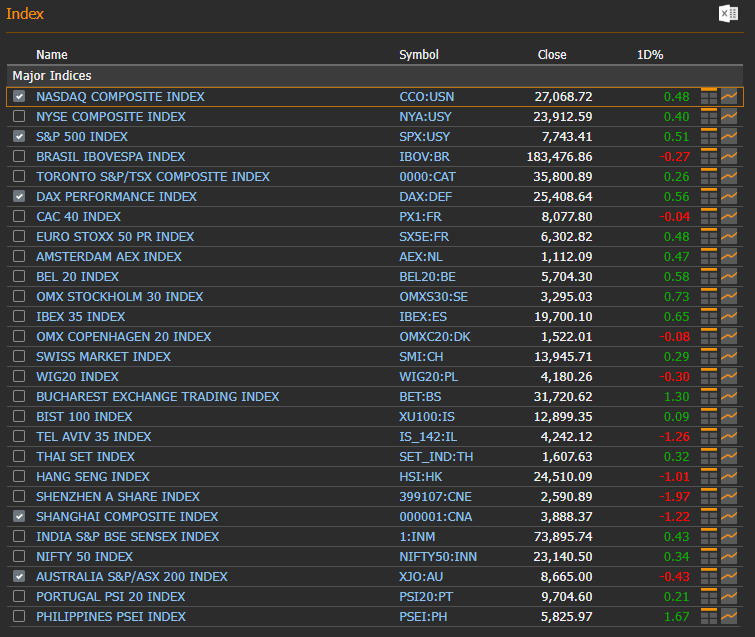
US equities closed higher on Friday, supported by technology shares. The S&P 500 advanced 0.51% to 7,743.41, the Nasdaq Composite gained 0.48% to 27,068.72, and the Dow Jones Industrial Average rose 0.93% to 51,828.62.
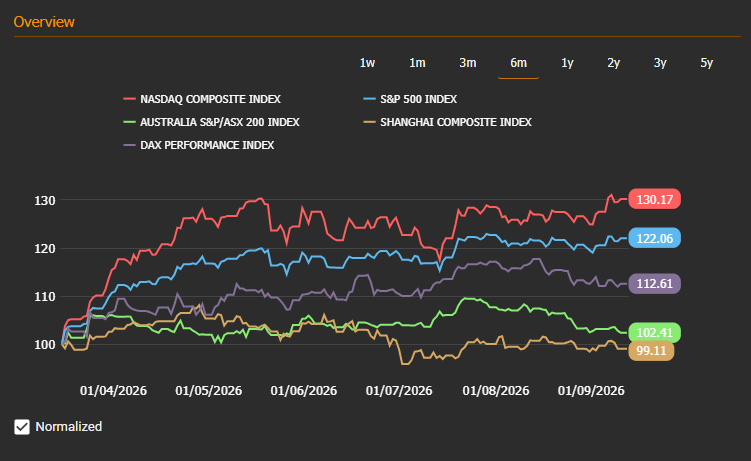
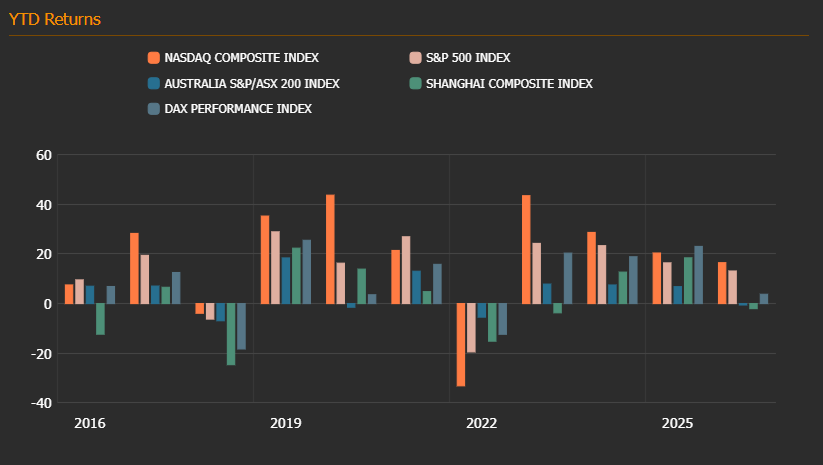
For the week, the S&P 500 gained 1.21%, while the Nasdaq rose approximately 2.1%, reflecting continued strength in technology and AI-related companies. The Dow increased by around 0.3%, recovering part of its previous week’s decline.
Technology remained the market’s main source of support. Microsoft shares advanced after the company introduced new Copilot capabilities, including coding and autonomous-agent tools. Qualcomm and Dell also recorded strong gains, while Nvidia finished modestly higher. These moves helped offset losses across several other S&P 500 sectors.
European equities also finished Friday moderately higher. The pan-European STOXX 600 gained 0.35% to 638.65, Germany’s DAX rose 0.56%, and the Euro STOXX 50 advanced 0.48%. France’s CAC 40 was broadly unchanged, slipping 0.04%, while the UK’s FTSE 100 added 0.14%. The STOXX 600 ended the week approximately 0.5% higher, recovering from the previous week’s decline.
Source: EquityRT Markets Overview. Data as of 25/09/2026
Commodity Markets: Oil Remains Above $100 as Precious Metals Pare Weekly Losses
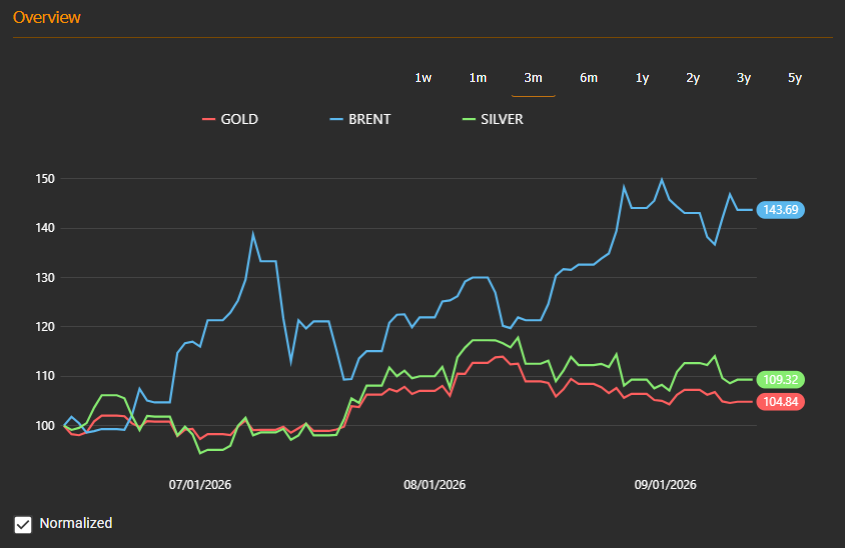
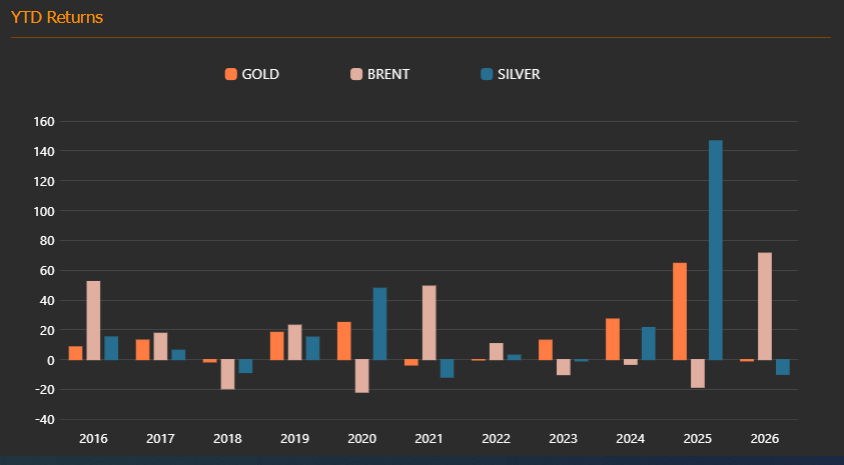
Commodity markets remained heavily influenced by Middle East supply risks, diplomatic developments and expectations of further global monetary tightening. Oil prices declined on Friday as hopes increased that the US and Iran could agree on a phased route out of the conflict. Nevertheless, continuing Houthi attacks on Saudi Arabia and disruptions to regional energy flows kept Brent crude above $100 per barrel.
Brent crude fell 2.1% on Friday to settle at $104.32 per barrel, while US West Texas Intermediate declined 2.3% to $92.41. For the week, Brent gained approximately 0.4%, while WTI recorded a sharp decline as the two benchmarks diverged amid regional supply concerns and uncertainty surrounding a possible US restriction on diesel exports.
Precious metals recovered modestly on Friday but remained under pressure for the week. Spot gold edged 0.1% higher to $4,282.98 per ounce, while US gold futures settled 0.5% higher at $4,321.20. Despite the Friday rebound, spot gold declined approximately 2.1% over the week, marking its fourth weekly loss in five weeks.
Gold continued to face headwinds from a stronger dollar, hawkish Federal Reserve signals and rising Treasury yields. The US 10-year yield reached a fresh 19-year high during the week, increasing the opportunity cost of holding non-interest-bearing bullion. The Fed’s 25-basis-point increase to 3.75%–4.00% in the previous week, together with indications that further tightening may be required, also weighed on demand.
Silver outperformed gold on Friday, rising 0.5% to $64.26 per ounce, although it also finished the week lower. Platinum advanced 1.7% to $1,780.28, while palladium slipped 0.3% to $1,270.30; both metals were also headed for weekly declines.
Source: EquityRT Commodity Overview. Data as of 25/09/2026
Yield Curve Watch: Long-Term Yields Rise as Key Spreads Widen
US Treasury yields climbed during a volatile week as markets continued to absorb the Federal Reserve’s September 16 rate increase and its indication that further tightening could follow. Persistent inflation concerns, elevated energy prices and hawkish comments from Fed officials kept upward pressure on borrowing costs.
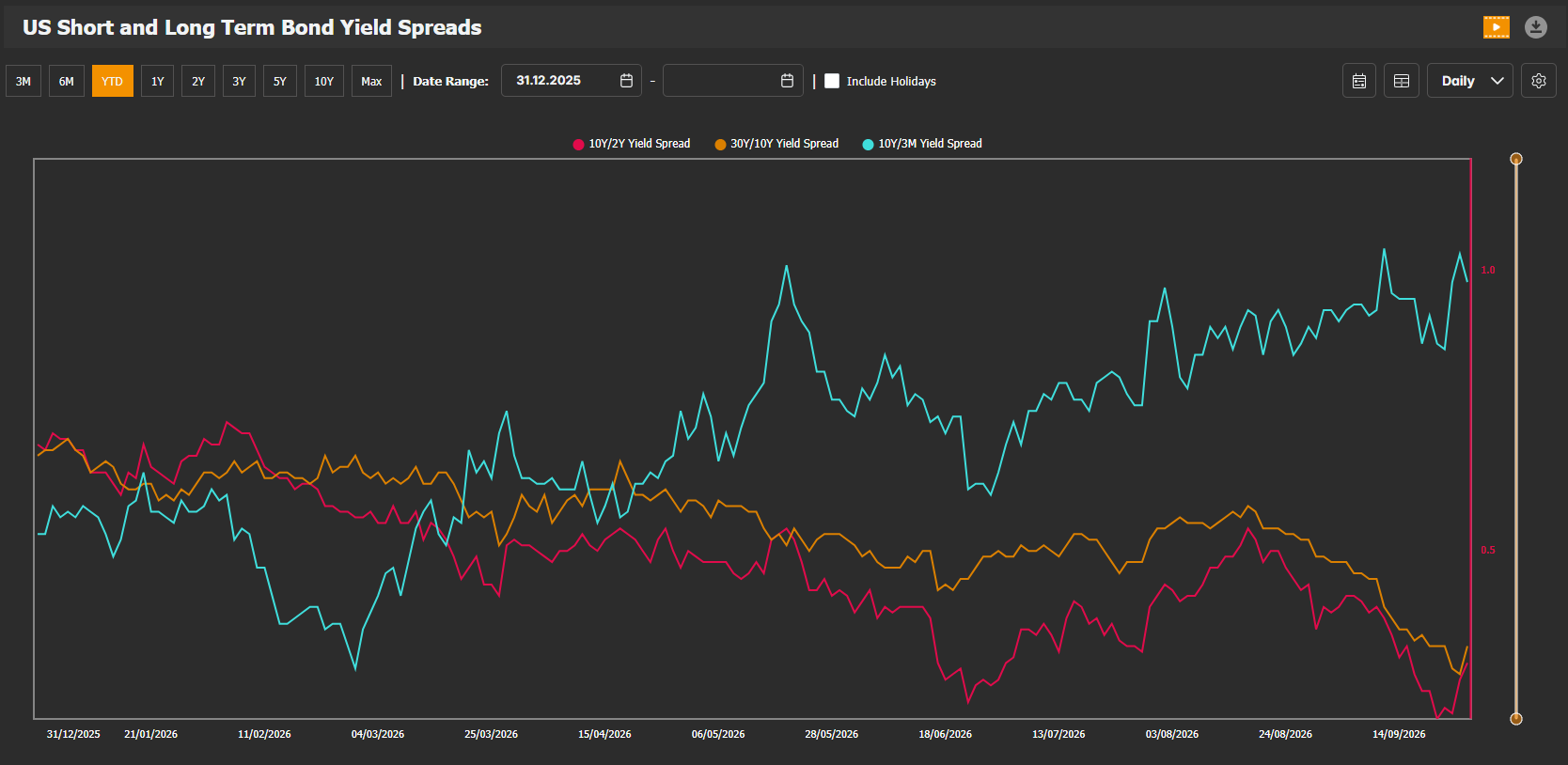
The 10-year Treasury yield finished Friday at 5.17%, up from 5.01% a week earlier. The two-year yield increased more moderately, from 4.76% to 4.81%, while the 30-year yield climbed from 5.34% to 5.49%. The three-month yield rose from 4.14% to 4.24%.
The 10Y-2Y spread widened to approximately 0.36 percentage points, or 36 basis points, from 25 basis points the previous Friday. This represents a modest steepening of this section of the curve, as the increase in the 10-year yield exceeded the rise in the policy-sensitive two-year yield. The move partly reversed the sharp flattening seen earlier in September, although the spread remains narrower than the levels recorded in mid-August.
The 10Y-3M spread also widened slightly, reaching approximately 0.93 percentage points from 0.87 percentage points a week earlier. The comparatively wide spread reflects the continued gap between long-term yields and short-term Treasury-bill rates. Longer maturities remain under pressure from persistent inflation, elevated energy costs, fiscal uncertainty and expectations of heavy Treasury issuance.
Source: EquityRT ChartPro, Data as of 25/09/2026
Gold vs DXY: Dollar Strength Keeps Gold Under Pressure
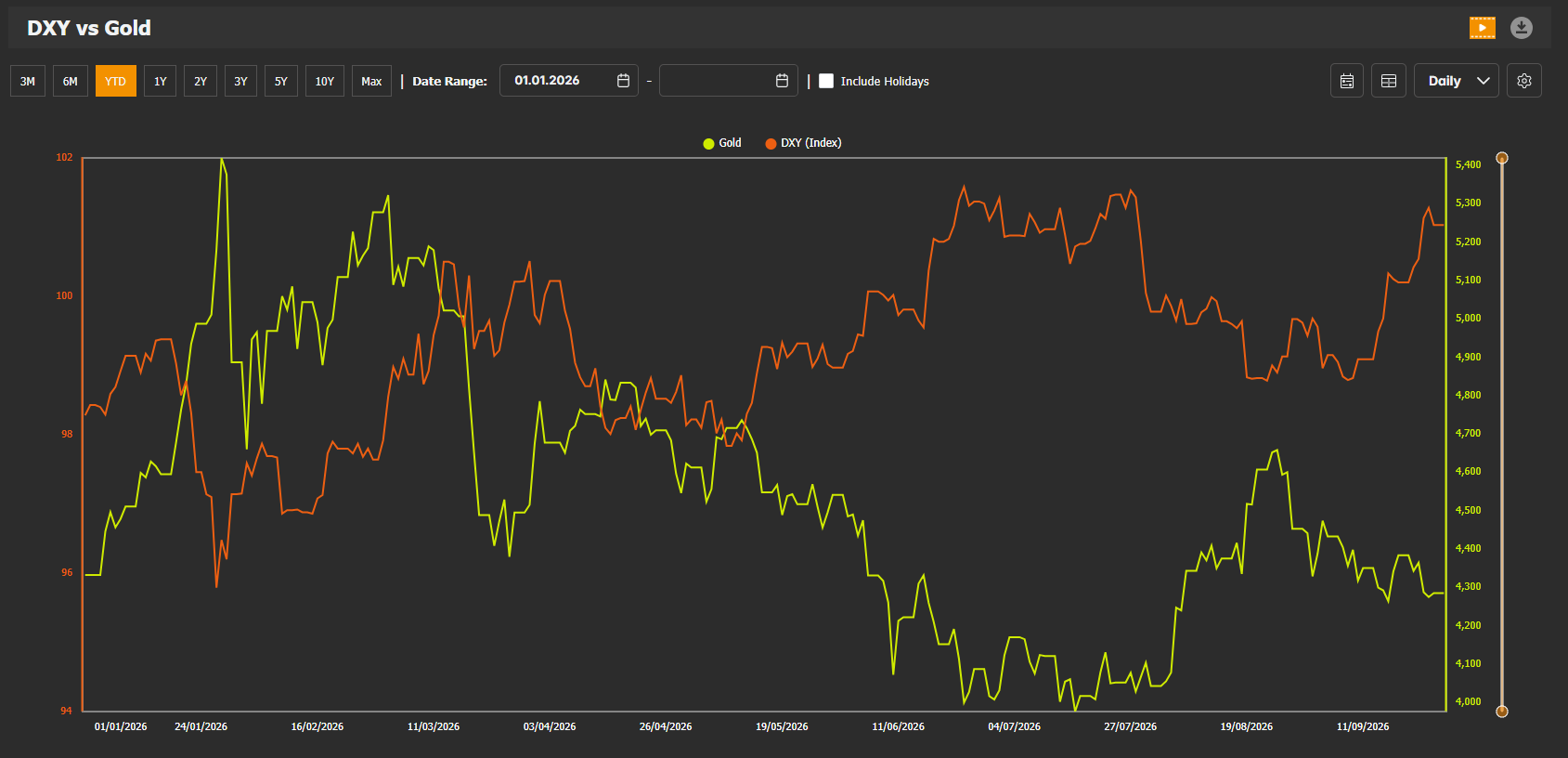
Gold remained under pressure during the week as the US dollar strengthened and Treasury yields climbed to multi-year highs. Markets continued to absorb the Federal Reserve’s September 16 rate increase to 3.75%–4.00% and its indication that additional tightening could follow.
The dollar index strengthened over the week, rising from 100.22 to approximately 101.01. Expectations of further Fed rate increases, resilient US economic activity and rising Treasury yields supported the dollar. DXY eased 0.27% on Friday but still gained approximately 0.8% for the week, having reached 101.40 during Thursday’s session.
Gold edged higher on Friday but failed to reverse its weekly decline. Spot gold gained 0.1% to approximately $4,283 per ounce, while US gold futures settled 0.5% higher at $4,321.20. Nevertheless, spot gold fell around 2.1% over the week, recording its fourth weekly loss in five weeks.
Source: EquityRT ChartPro, Data as of 25/09/2026
📈 Chart of the Week: US Yield Curve Steepens at Historically High Rate Levels
US Treasury yields rose sharply during the week ended September 25 as markets continued to assess the Federal Reserve’s latest rate increase, persistent inflation pressures and the possibility of further monetary tightening.
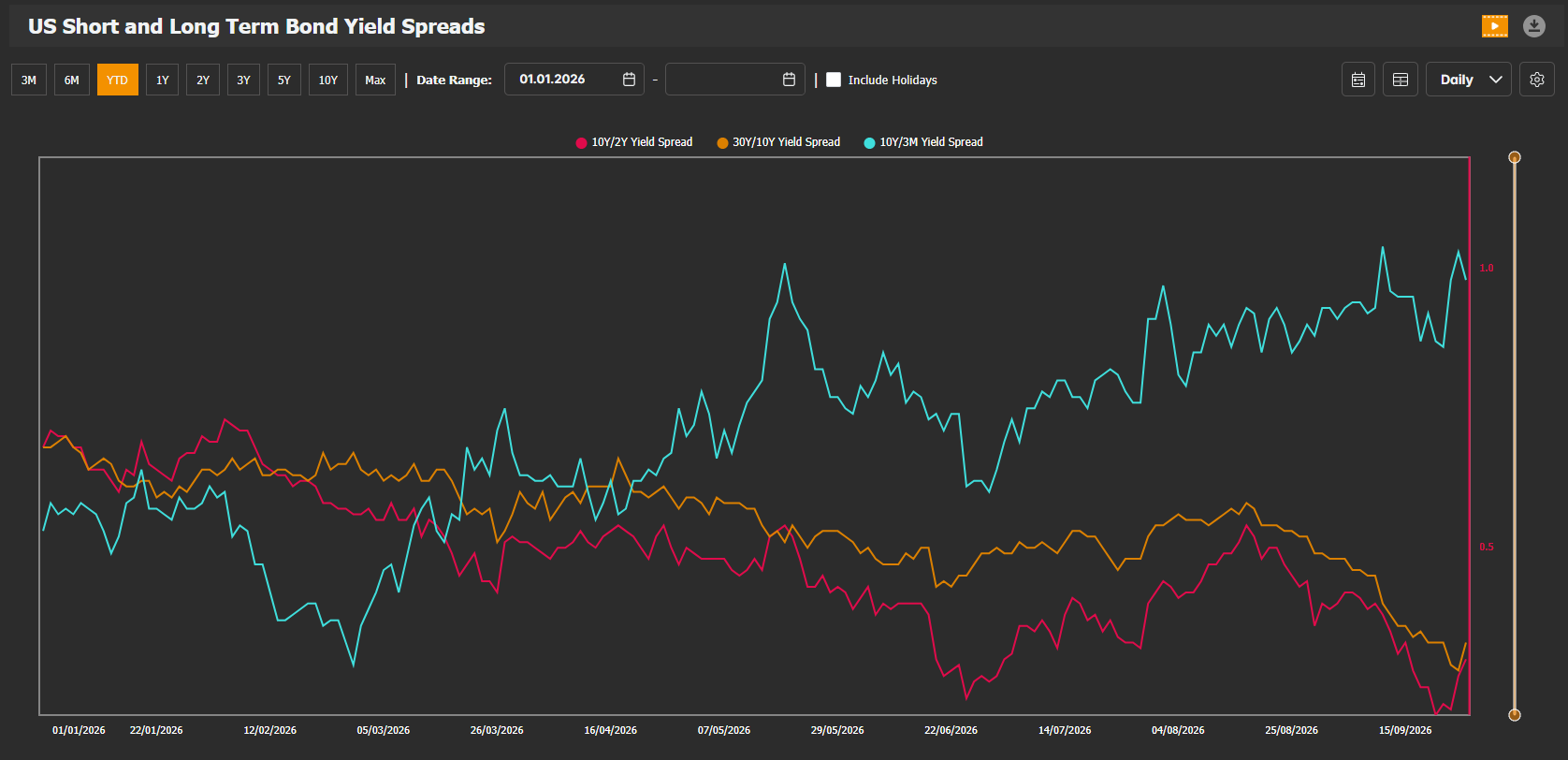
As of September 25, the 10-year Treasury yield stood at 5.17%, compared with 4.81% for the two-year maturity. As a result, the 10-2Y spread widened from 25 to 36 basis points over the week.
The 10Y-3M spread also increased, from 87 to 93 basis points, while the 30Y-10Y spread remained broadly stable at approximately 32 basis points.
The movements indicate moderate steepening between short- and longer-term maturities rather than a uniform flattening of the curve. Persistent inflation concerns, elevated energy prices, fiscal uncertainty and heavy Treasury-supply expectations continued to place upward pressure on longer-term yields.
Why it matters: A steeper curve would normally be associated with stronger growth expectations. In the current environment, however, the steepening is taking place at exceptionally high yield levels and also reflects elevated inflation and fiscal risk premiums. Upcoming US employment and PCE inflation data will therefore be important in determining whether the curve steepens further or begins to flatten again.
Source: EquityRT | Data as of 25/09/2026