

Market Focus: Fed Minutes and Bond Yields Take Center Stage
Global markets enter the first full week of October with the Federal Reserve’s September meeting minutes, elevated government bond yields and developments in the Middle East firmly in focus. In the US, ISM Services PMI and preliminary University of Michigan consumer sentiment will provide fresh evidence on activity and household confidence, while several Fed officials are scheduled to speak.
The policy backdrop has shifted following softer-than-expected US PCE inflation and September employment data, which have reduced expectations for another immediate Fed rate increase. Markets have largely moved away from an October hike, although inflation remains above target and the outlook for further tightening later this year remains open.
At the same time, the bond market remains a major source of risk following the recent surge in government yields. The US 10-year Treasury yield recently reached 5.34%, a 24-year high, increasing borrowing costs and putting renewed pressure on equity valuations as the fourth quarter begins.
Middle East developments also remain critical, with markets monitoring the US-Iran standoff and efforts to reopen the Strait of Hormuz. Any progress toward restoring shipping flows could ease pressure on energy prices, while renewed escalation would risk another inflationary impulse.
US: Fed Minutes Put the Next Rate Move in Focus
Wednesday’s FOMC minutes will be the main US event, providing more detail on the Fed’s September decision to raise rates for the first time since 2023 and policymakers’ assessment of inflation and employment risks. Markets will be particularly interested in the degree of support for further tightening and the conditions officials believe would justify another rate increase.
The minutes come after subsequent data softened the case for another immediate hike. September payroll growth disappointed, while August PCE inflation came in below expectations, prompting markets to sharply reduce the probability of an October rate increase. The minutes predate the latest employment report, however, making the contrast between the Fed’s September thinking and more recent data particularly important.
Services activity will provide the week's main US growth signal. The ISM Services PMI is expected to remain firmly in expansion territory, while final S&P Global Services PMI will provide an additional read on September activity. The US trade deficit is expected to widen in August as imports outpace exports.
On Friday, preliminary University of Michigan consumer sentiment will be closely watched, particularly household inflation expectations as elevated energy and living costs continue to weigh on confidence. Weekly jobless claims, consumer credit and wholesale inventories are also due.
On the corporate side, PepsiCo and Delta Air Lines are among the companies reporting earnings as investors begin positioning for the third-quarter earnings season. Elsewhere in the Americas, Brazil’s presidential election will command attention, while Canada releases September employment and trade data. Inflation figures are also due from Brazil and Mexico.
Europe: ECB Minutes and Activity Data in Focus
The ECB will publish the accounts of its latest monetary-policy meeting, offering more detail on the September decision to raise rates by 25 basis points and policymakers’ assessment of persistent inflation and growth risks. Markets will look for indications of whether another increase is likely as the ECB continues to balance elevated price pressures against a relatively fragile economic outlook.
In Germany, industrial production is expected to rebound, while factory orders may decline following three consecutive monthly increases. Trade data will provide another indication of external demand. Euro Area retail sales are also expected to recover following July’s decline, while producer prices are forecast to show stronger growth.
Services PMIs from Italy and Spain will provide further evidence on regional activity. France, Italy and Türkiye will release industrial-production figures, while the UK calendar is comparatively light, with construction PMI and housing indicators among the main releases.
Asia-Pacific: RBI Decision Leads a Lighter Regional Calendar
The Reserve Bank of India will deliver the region’s main monetary-policy decision, with a 25-basis-point increase to 5.5% widely expected as higher food and fuel costs threaten to push inflation higher during the fourth quarter.
China will remain largely absent from the economic calendar, with markets closed through October 7 for the Golden Week holiday and no major economic releases scheduled. Attention will therefore shift to the reopening of Chinese markets later in the week and their response to developments in global rates, energy and trade.
In Japan, investors will monitor wages, household spending, the current account, consumer confidence and machine-tool orders, together with the October Reuters Tankan survey. Wage growth is expected to moderate, making the data relevant for assessing the outlook following the Bank of Japan’s recent policy tightening.
What Investors Should Watch
1. Is the Fed Ready to Pause After September’s Hike?
The September FOMC minutes will reveal how strongly policymakers favored additional tightening. Softer subsequent inflation and employment data have reduced expectations for an October hike, making the gap between the Fed’s September debate and current market pricing particularly important.
2. Can the Bond Market Stabilize?
The US 10-year Treasury yield has recently reached 5.34%, its highest level in 24 years. Treasury yields have therefore become an increasingly important constraint on equity valuations and financial conditions, even as the near-term Fed outlook has become less hawkish.
3. Is US Growth Beginning to Lose Momentum?
ISM Services, jobless claims and consumer sentiment will help determine whether September's weak payroll growth represents broader economic moderation or remains concentrated in the labor market.
4. Can Middle East Diplomacy Ease the Energy Risk Premium?
Efforts to reopen the Strait of Hormuz remain a key market variable. Progress could reduce pressure on oil prices and inflation expectations, while renewed escalation would risk another energy-driven rise in global yields.
Global Equities: AI Optimism Supports Markets Despite Elevated Oil Prices and Bond Yields
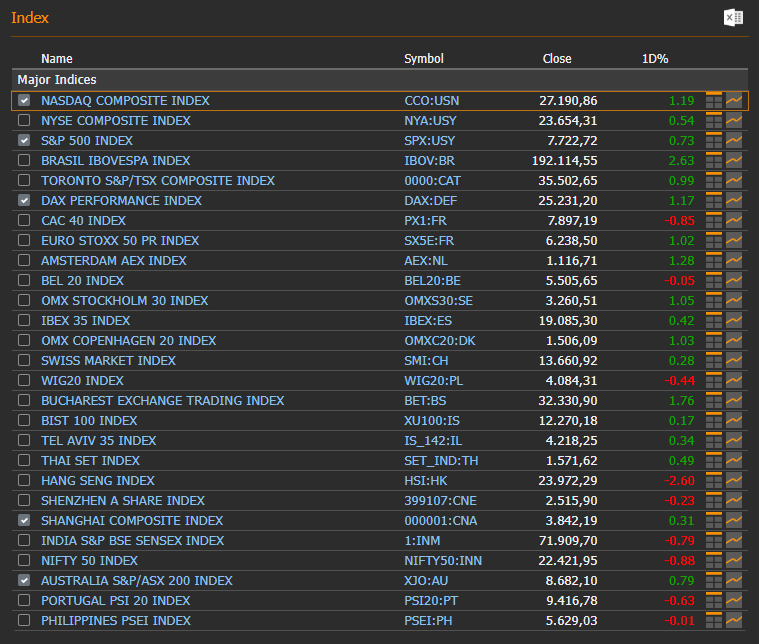
Global equities ended Friday mostly higher as renewed optimism around artificial intelligence and hopes for progress in US-Iran negotiations helped offset concerns over elevated oil prices, persistent inflation and multi-decade highs in government bond yields.
US Treasury yields edged lower on Friday after reaching fresh multi-decade highs earlier in the week. However, the 10-year yield remained elevated at around 5.17%, while Brent crude stayed above $100 per barrel, maintaining pressure on inflation and global interest-rate expectations.
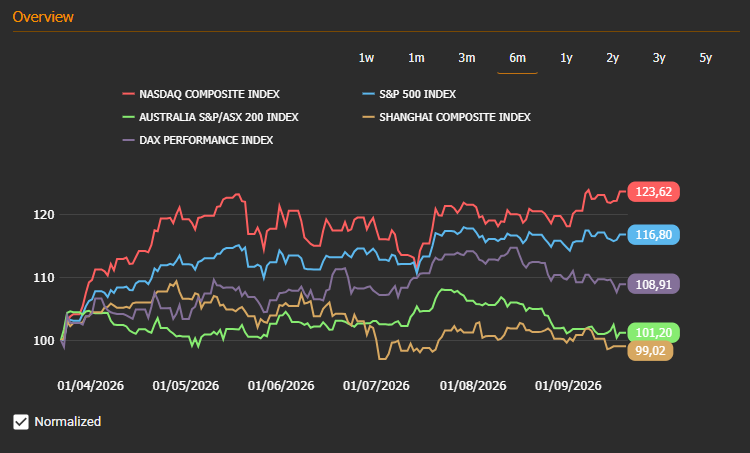
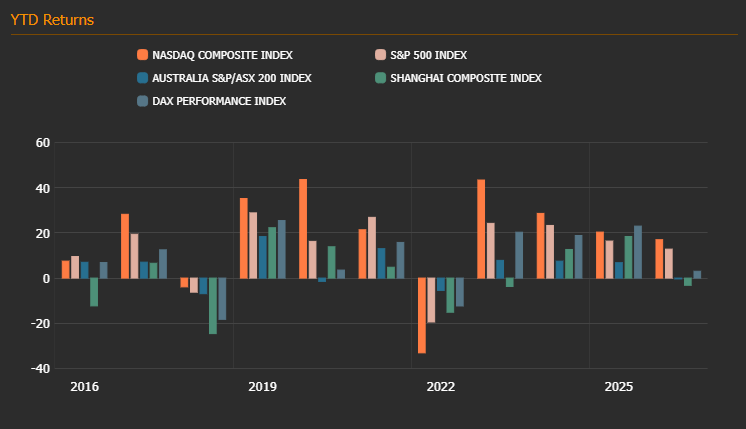
US equities closed higher on Friday, supported by technology shares. The S&P 500 advanced 0.51% to 7,743.41, the Nasdaq Composite gained 0.48% to 27,068.72, and the Dow Jones Industrial Average rose 0.93% to 51,828.62.
For the week, the S&P 500 gained 1.21%, while the Nasdaq rose approximately 2.1%, reflecting continued strength in technology and AI-related companies. The Dow increased by around 0.3%, recovering part of its previous week’s decline.
Technology remained the market’s main source of support. Microsoft shares advanced after the company introduced new Copilot capabilities, including coding and autonomous-agent tools. Qualcomm and Dell also recorded strong gains, while Nvidia finished modestly higher. These moves helped offset losses across several other S&P 500 sectors.
European equities also finished Friday moderately higher. The pan-European STOXX 600 gained 0.35% to 638.65, Germany’s DAX rose 0.56%, and the Euro STOXX 50 advanced 0.48%. France’s CAC 40 was broadly unchanged, slipping 0.04%, while the UK’s FTSE 100 added 0.14%. The STOXX 600 ended the week approximately 0.5% higher, recovering from the previous week’s decline.
Source: EquityRT Markets Overview. Data as of 02/10/2026
Commodity Markets: Oil Holds Above $100 as Precious Metals Extend Weekly Losses
Commodity markets remained heavily influenced by Middle East supply risks, elevated bond yields and changing expectations for global monetary policy. Oil markets were volatile, with concerns over tight refined-product supplies and geopolitical tensions offset by recovering Middle Eastern crude flows and coordinated efforts to release emergency energy reserves.
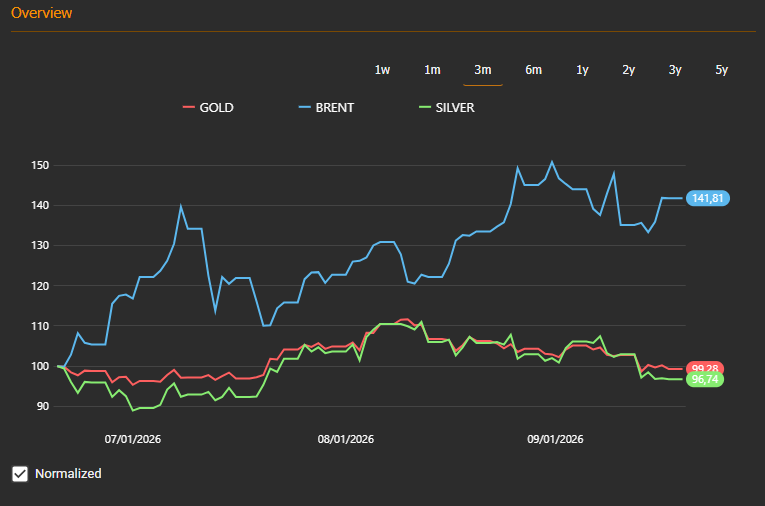
Brent crude settled at $102.25 per barrel on Friday, down just 0.1% on the day, while WTI fell 1.9% to $91.11. For the week, Brent edged around 0.1% higher, while WTI declined approximately 1.6%. Expectations for additional European diesel supplies and the G7's coordinated emergency reserve release helped ease some concerns over tight fuel markets, although continuing Middle East supply risks kept Brent above $100.
Precious metals remained under pressure as elevated Treasury yields and a relatively firm US dollar weighed on demand. Gold finished the week substantially lower, extending its recent decline, while silver suffered an even sharper weekly loss. December gold futures settled around $4,162 per ounce, down roughly 3.6% for the week, while silver futures ended around $60.42, falling about 6%–7% over the week.
Higher bond yields remained the key headwind for precious metals. The US 10-year Treasury yield climbed to 5.34% on Thursday, its highest level since 2002, as persistent inflation concerns, elevated energy prices and expectations that monetary policy may remain restrictive pushed global borrowing costs higher. Softer US inflation and employment data subsequently reduced expectations for another immediate Fed rate increase, but long-term yields remained elevated.
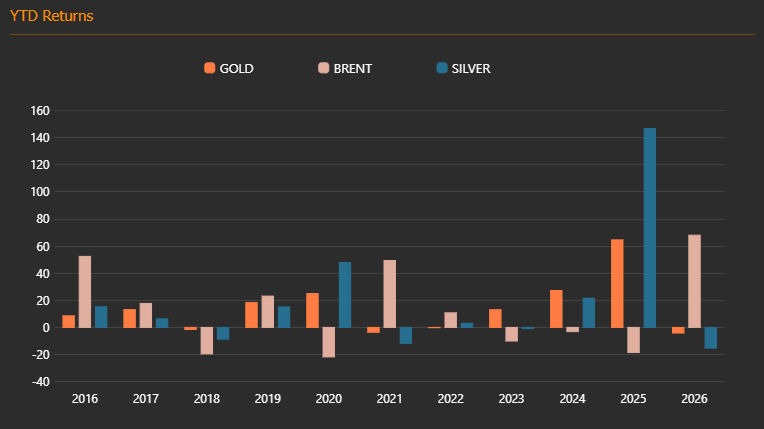
Source: EquityRT Commodity Overview. Data as of 02/10/2026
Yield Curve Watch: Long-End Pressure Drives Renewed Curve Steepening
US Treasury yields remained elevated during a volatile week, with long-term borrowing costs reaching multi-decade highs amid persistent inflation concerns, high energy prices and expectations that monetary policy will remain restrictive. The benchmark 10-year yield climbed as high as 5.34% on Thursday, its highest level since 2002, before retreating after softer-than-expected September employment data reduced expectations for another immediate Fed rate increase.
The September jobs report triggered some relief at the short end of the curve. Nonfarm payrolls increased by just 29,000, while unemployment edged up to 4.2%. Following the report, the policy-sensitive 2-year yield fell to around 4.76%, while the 10-year yield eased toward 5.2%. The 10Y-2Y spread nevertheless remained positive at around 0.4 percentage points, after narrowing sharply in September. This indicates that long-term yields continue to carry a sizeable premium over shorter maturities even as expectations for an October Fed hike have diminished.
The most pronounced move has occurred in the 10Y-3M spread, which has widened to around 1.2 percentage points, its highest level on the chart this year. The widening reflects strong upward pressure on longer-term yields relative to very short-term rates, as markets continue to price inflation, energy and fiscal risks into longer maturities. Meanwhile, the 30Y–10Y spread remains considerably narrower at around 0.3 percentage points, suggesting that the recent steepening has been concentrated primarily between short and intermediate-to-long maturities.
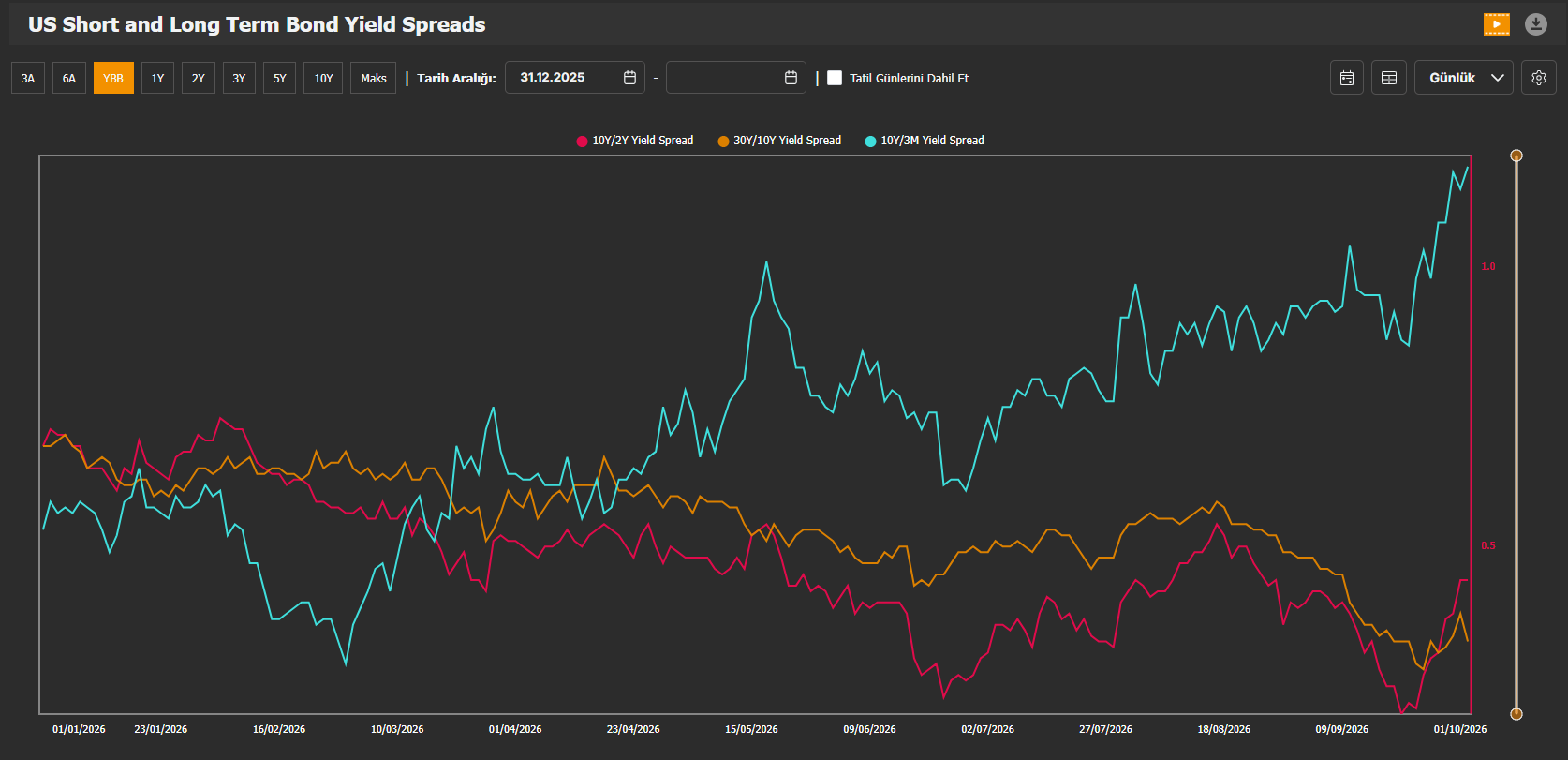
Source: EquityRT ChartPro, Data as of 02/10/2026
Gold vs DXY: Stronger Dollar and Surging Yields Deepen Gold’s Decline
Gold came under renewed pressure during the week as the US dollar strengthened and Treasury yields climbed to their highest levels in more than two decades. Persistent inflation concerns, elevated energy prices and expectations that US monetary policy could remain restrictive supported the dollar and increased the opportunity cost of holding non-yielding bullion.
The US Dollar Index rose for a third consecutive week, reaching its highest level in around 18 months. DXY finished the week around 101.9, gaining approximately 1%, supported by high US yields, relatively resilient economic activity and elevated energy prices. The dollar eased on Friday after weaker-than-expected US payrolls reduced expectations for another Fed rate increase in October but retained most of its weekly advance.
Gold, meanwhile, extended its decline. Spot gold fell 0.9% on Friday to around $4,140 per ounce and lost approximately 3.4% over the week. US gold futures settled 1% lower at $4,162.30. Gold briefly rallied more than 1% after September payrolls rose by only 29,000, but the move reversed as elevated Treasury yields and the stronger dollar continued to weigh on bullion.
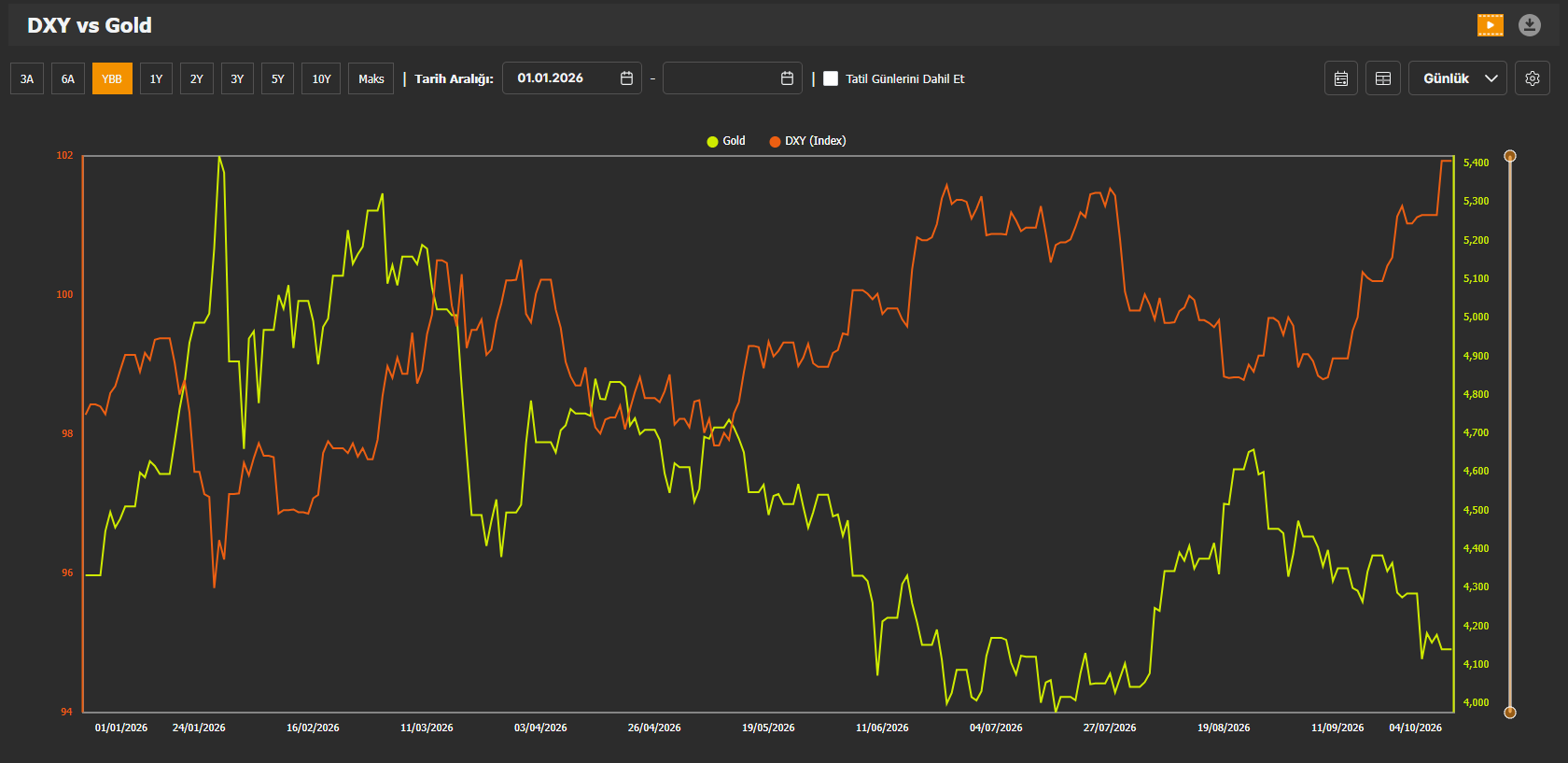
Source: EquityRT ChartPro, Data as of 02/10/2026
📈 Chart of the Week: Is the Fed Losing Control of the Long End?
The gap between the Federal Reserve’s policy rate and market interest rates has widened sharply. While the effective Fed Funds rate stands at around 3.9%, the 2-year Treasury yield has climbed close to 4.9% and the 10-year yield above 5.2%, reflecting a significant tightening in market-based borrowing costs.
The rise in the 10-year yield is particularly notable. Longer-term yields are increasingly reflecting not only expectations for Fed policy, but also persistent inflation risks, elevated energy prices, fiscal concerns and increased Treasury supply.
The divergence leaves markets facing an unusual policy backdrop: the Fed may be approaching a pause, but financial conditions are continuing to tighten through the bond market.
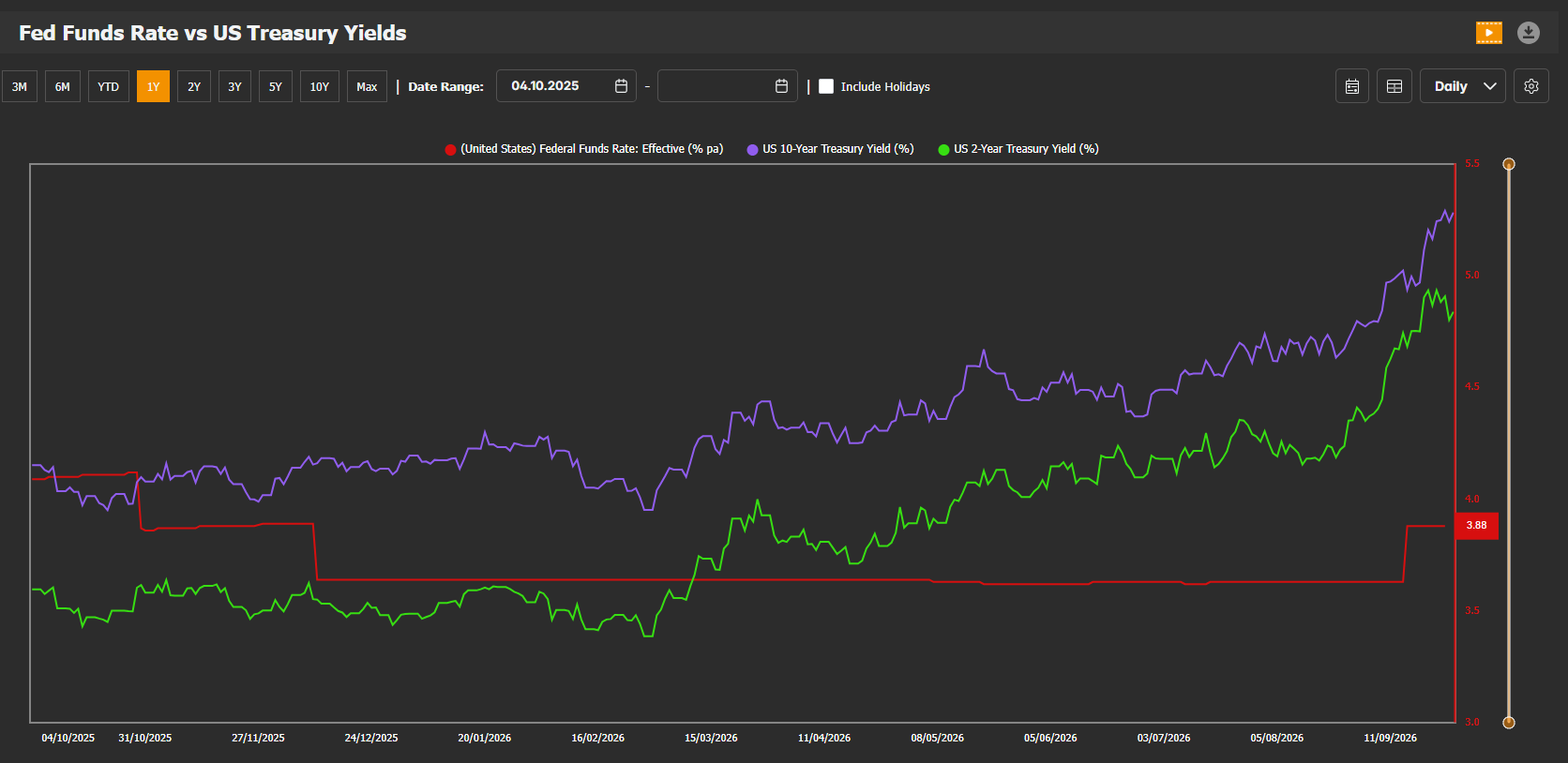
Source: EquityRT | Data as of 02/10/2026