

Market Focus: Inflation Shock, Fed Minutes and Global Demand Under Scrutiny
Global markets enter November 16-22 following a sharp repricing of US interest-rate expectations. Hotter-than-expected October consumer inflation, persistent producer-price pressures and a selloff in government bonds have increased the importance of upcoming activity data and Federal Reserve communications.
The week brings US retail sales and industrial production for October, minutes of the latest Federal Reserve meeting and the final November consumer-sentiment reading. Together, they will test whether demand remains resilient despite higher borrowing costs and whether policymakers see further tightening as necessary.
In Europe, UK inflation and labour-market figures, euro-area industrial production and German sentiment surveys will provide a fresh assessment of growth and pricing pressures. Canada’s October CPI will also help shape the North American policy outlook.
Asia’s latest economic data point to slowing momentum in China and a near-stagnant Japanese economy. China’s October industrial production growth eased to 4.8% year-on-year, while retail sales increased just 0.4%, reinforcing the imbalance between industrial activity and domestic consumption.
Investors will also monitor corporate earnings, including major technology results, for evidence that AI infrastructure investment can generate sustainable returns at a time of rising discount rates.
Americas: US Consumer Spending and Fed Minutes Test Higher-Rate Outlook
US October retail sales are scheduled for Tuesday, November 17, alongside industrial production and capacity utilisation. The releases will provide an important check on household spending and manufacturing momentum following stronger inflation readings.
October CPI surprised on the upside in the preceding week, prompting a broad selloff in Treasurys and strengthening expectations of a December Federal Reserve rate increase. The latest producer-price data offered some relief at the margin, but did not remove concerns about persistent underlying inflation.
Minutes of the Federal Reserve’s October meeting are scheduled for Wednesday, November 18. Investors will examine the discussion of inflation persistence, labour-market resilience and the balance of risks to the policy outlook.
Other US indicators include the Empire State manufacturing survey, housing-related releases, weekly jobless claims and the final November University of Michigan consumer-sentiment report. Inflation expectations within the sentiment survey will be closely watched.
Corporate results and guidance will be important for assessing the resilience of technology investment, pricing power and consumer demand, particularly as higher Treasury yields put pressure on equity valuations.
Canada’s October consumer-price report is due Monday, November 16. The release will provide an updated reading on inflation persistence and the scope for future Bank of Canada policy adjustments.
The key question for the Americas is whether activity remains strong enough to sustain corporate earnings without adding to inflation pressures and extending the period of restrictive interest rates.
Europe: UK Inflation and Labour Data Meet Uneven Growth Signals
The UK will publish October labour-market figures and consumer inflation data during the week. Employment trends and wage growth will help determine whether inflation persistence continues to constrain monetary-policy flexibility.
Euro-area September industrial production will provide another assessment of factory activity, while German ZEW sentiment will show whether business expectations are improving amid uncertain demand and financing conditions.
European markets enter the week after relatively resilient equity performance, even as rising US yields and global technology volatility challenge risk appetite. Investors will distinguish improvements in domestic activity from changes driven mainly by financial conditions.
Additional national inflation, trade and confidence releases will offer context for the region’s outlook, while developments in energy prices remain an important influence on business costs and household purchasing power.
Corporate earnings and management guidance will provide a further gauge of industrial demand, consumer spending and the ability of European businesses to protect margins.
Asia-Pacific: China Activity and Japan GDP Test Regional Momentum
China’s October activity indicators showed a broader slowdown, with industrial production growth easing to 4.8% year-on-year from 5.5% in September, below market expectations of 5.3%. Retail sales rose just 0.4%, down from 1.1% previously and below the 0.8% consensus forecast. Fixed-asset investment declined 8.1% over the first ten months of the year, underscoring persistent weakness in investment and property-related activity.
Japan’s preliminary third-quarter GDP contracted by 0.1% at an annualized rate, following growth in the previous quarter. Private consumption weakened, while business investment increased, pointing to divergent trends within domestic demand.
Australia will publish wage and employment indicators, providing evidence on domestic cost pressures and labour-market conditions. Japan’s consumer inflation figures later in the week will add to the regional policy picture.
Across Asia-Pacific, investors will assess how resilient manufacturing and exports are translating into household demand, particularly amid higher global borrowing costs and uncertain trade conditions.
Corporate updates from regional technology and industrial companies will offer further insight into demand for electronics, capital spending and profitability.
What Investors Should Watch
1. Can US Demand Withstand Higher Borrowing Costs?
October retail sales and industrial production will show whether consumer spending and manufacturing remain resilient after the latest inflation-driven rise in Treasury yields.
2. What Will the Fed Minutes Reveal About Further Tightening?
The October meeting minutes and scheduled Fed remarks will help investors assess the strength of support for further rate increases and the risks to the December decision.
3. Is China’s Growth Becoming Increasingly Uneven?
The figures point to weakening economic momentum and a persistent gap between industrial activity and domestic demand, raising questions about the need for additional policy support.
4. Will UK Inflation and Japan’s Weak GDP Influence Central Bank Expectations?
Japan’s marginal GDP contraction and upcoming UK inflation and employment data will provide fresh insights into economic conditions and the monetary policy outlook for both countries.
Global Equities: Weekly Gains Mask Renewed Technology Volatility
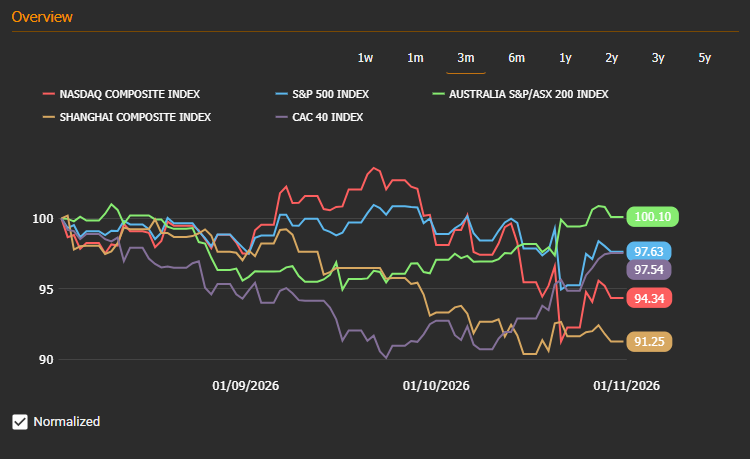
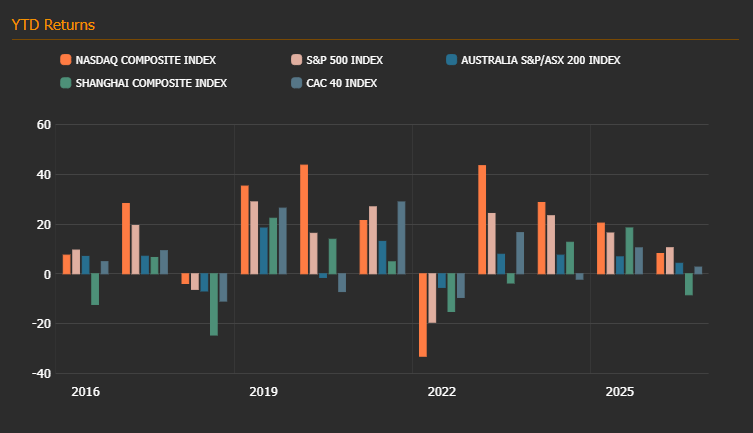
Global equities finished the week ending November 13 with a mixed underlying picture. US benchmarks recorded weekly gains despite a weaker Friday session, as technology shares came under renewed pressure and investors reassessed the impact of higher bond yields on valuations.
The S&P 500 rose approximately 2.5% over the week, the Dow gained 2.1% and the Nasdaq advanced 2.3%. On Friday, however, the S&P 500 fell 0.4% and the Nasdaq declined 0.9%, while the Dow edged up 0.1%.
Semiconductor shares were particularly volatile as company-specific uncertainty and questions about the profitability of AI-related investment weighed on the sector. The contrast between positive weekly index returns and weak technology leadership highlighted fragile investor confidence.
European equities were comparatively resilient, supported by improving fund flows and selective earnings strength. The next test will be whether corporate fundamentals can withstand tighter financial conditions and elevated volatility.
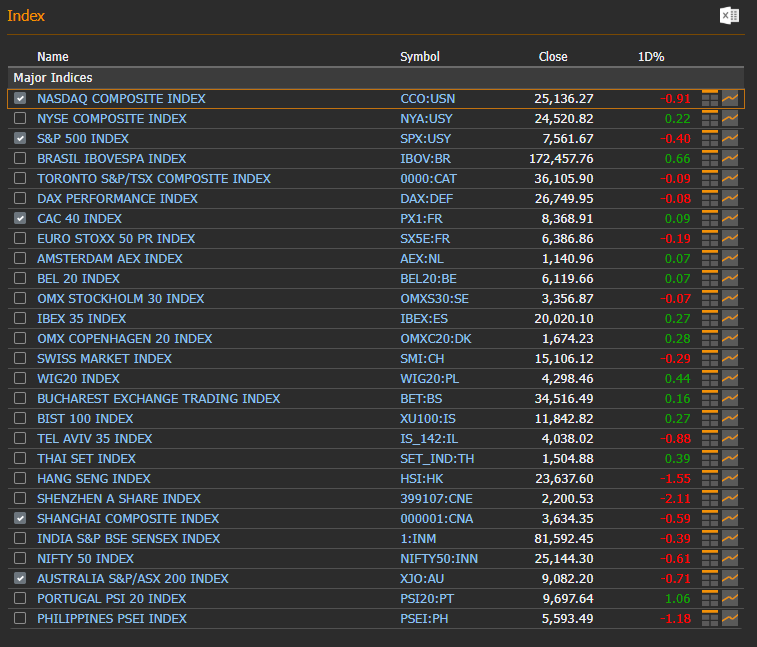
*The Dow quoted is the standard price-weighted index; it should not be confused with any equal-weighted Dow series.
Source: EquityRT Markets Overview. Data as of 13/11/2026
Commodity Markets: Oil Slips on Supply Concerns as Precious Metals Retreat
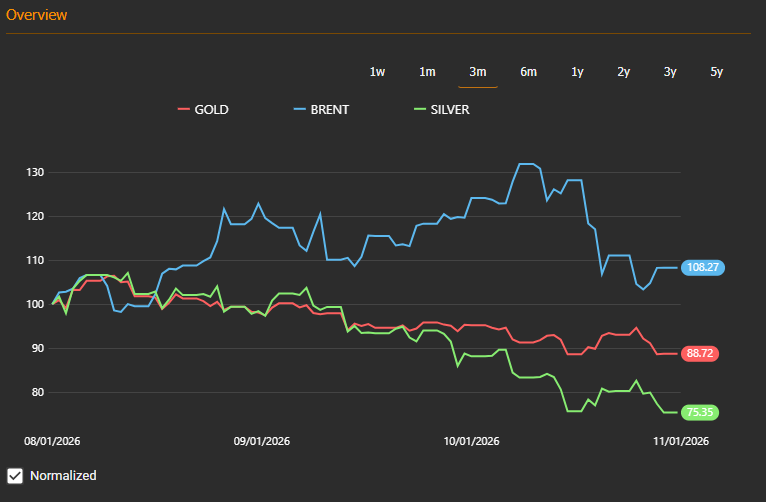
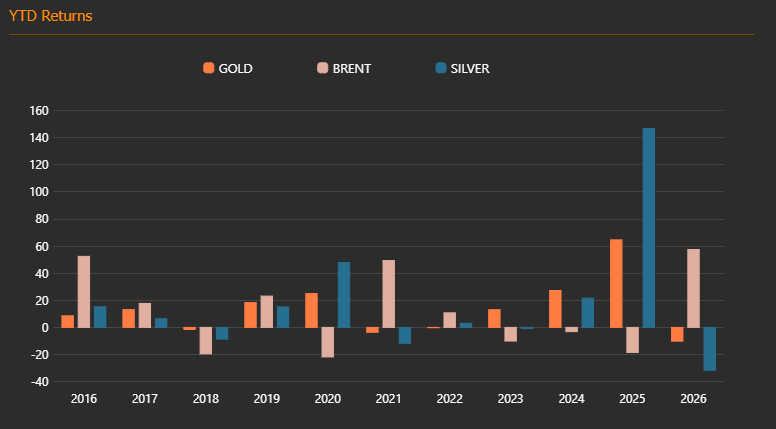
Oil prices declined for a second consecutive week ending November 13 as signs of a growing supply surplus outweighed continuing geopolitical risks. Brent settled near $95.84 per barrel and US WTI near $88.56, with both benchmarks down roughly 2.5% for the week.
Gold came under significant pressure as stronger US inflation, rising Treasury yields and a firmer dollar increased the opportunity cost of holding non-yielding assets. Bullion lost approximately 4.5% over the week, while silver also retreated sharply.
The divergence underscores the market’s competing forces: oil remains exposed to supply disruptions, but expectations of ample inventories have weighed on prices; precious metals are increasingly sensitive to the prospect of prolonged monetary tightening.
Source: EquityRT Commodity Overview. Data as of 13/11/2026
U.S. Yield Curve: Inflation Surprise Drives Sharp Treasury Selloff
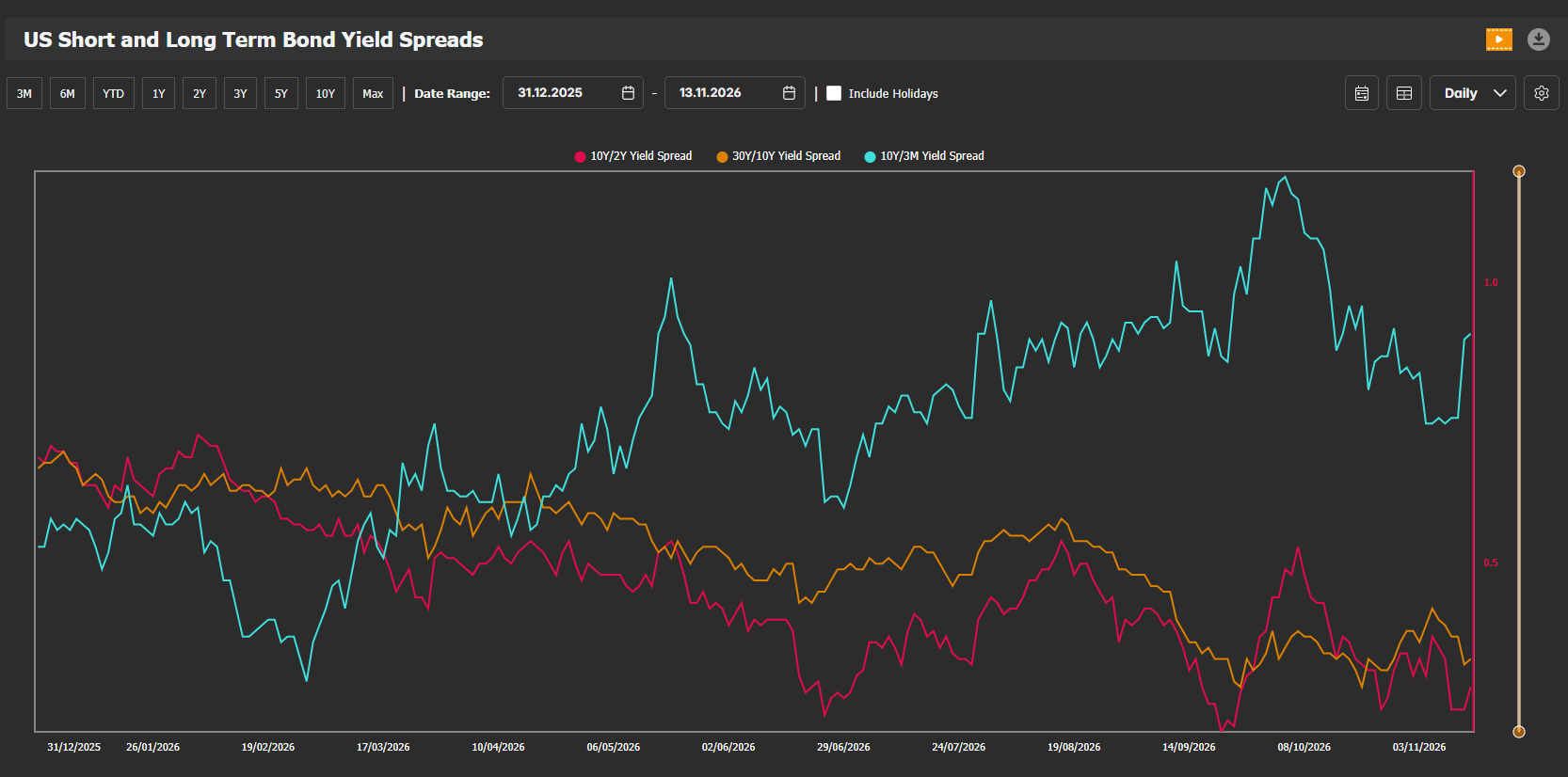
US Treasury yields surged during the week ending November 13 as unexpectedly firm October consumer inflation and hawkish policy expectations triggered a broad bond-market selloff. The benchmark 10-year yield finished near 5.14%, while the 2-year yield rose to approximately 4.85%.
The two-year yield increased by about 33 basis points over the week and the 10-year by approximately 28 basis points, indicating a pronounced repricing of the expected interest-rate path. The 10-year minus 2-year spread remained positive at roughly 29 basis points.
The upcoming Federal Reserve meeting minutes and US activity indicators will help determine whether the rise in yields reflects a sustained reassessment of policy or a more temporary reaction to inflation surprises. Higher long-term borrowing costs remain a risk for housing and business investment.
Source: EquityRT ChartPro, Data as of 13/11/2026
Gold vs. DXY: Rising Yields and Dollar Strength Pressure Bullion
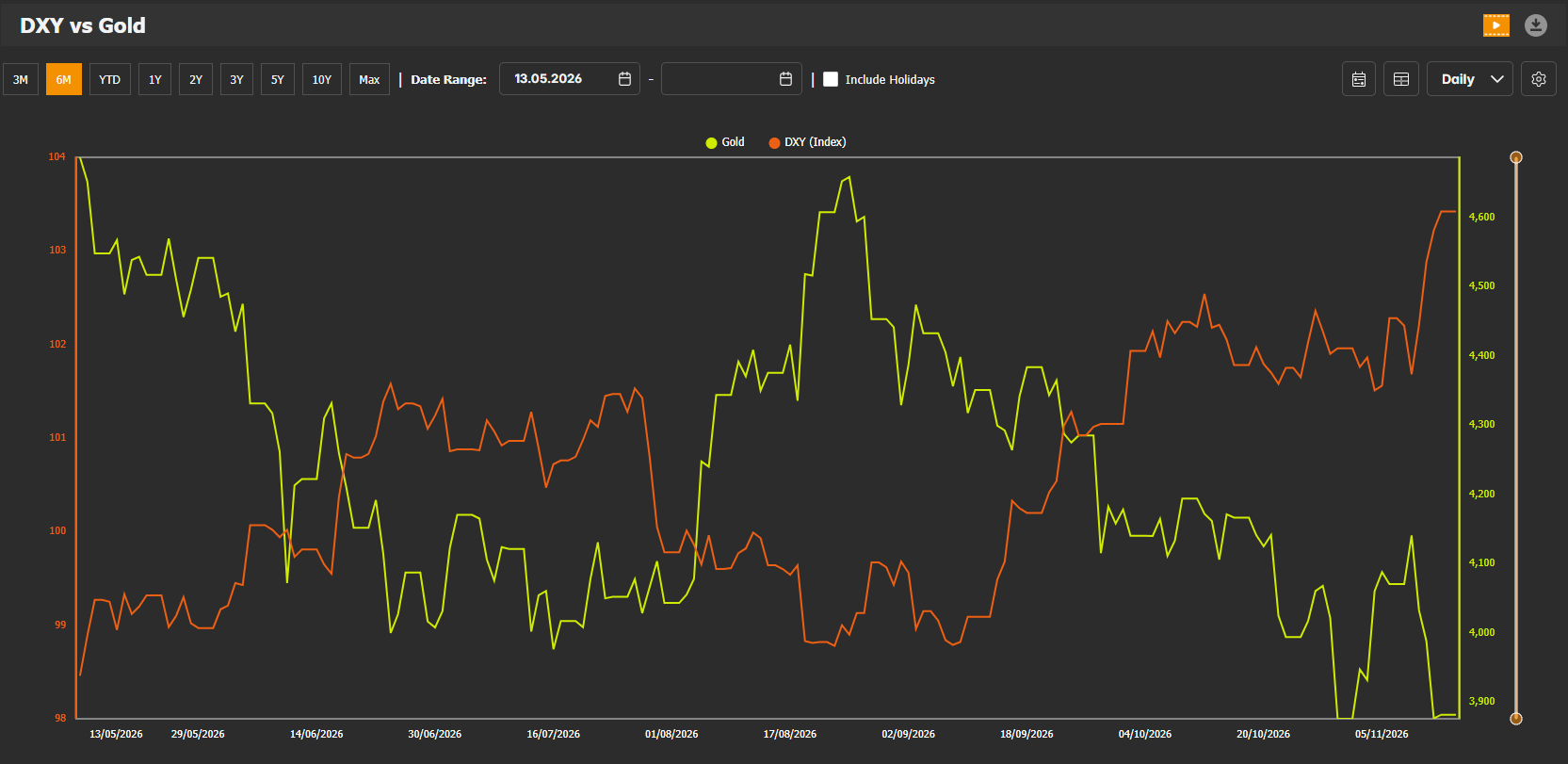
Gold weakened sharply during the week ending November 13 as the dollar strengthened and US Treasury yields rose on expectations of further Federal Reserve tightening. The combination reduced the relative appeal of non-yielding bullion and increased its cost for non-dollar buyers.
Spot gold traded near $3,880 an ounce on Friday and was down approximately 4.5% for the week. The dollar’s broader advance reinforced pressure on precious metals, although geopolitical uncertainty and occasional softer inflation signals provided intermittent support. The inverse relationship is not mechanical and may change as risk sentiment shifts.
Source: EquityRT ChartPro, Data as of 13/11/2026
📈 Chart of the Week: AI Stocks Under Pressure - Can Nvidia Earnings Restore Market Confidence?
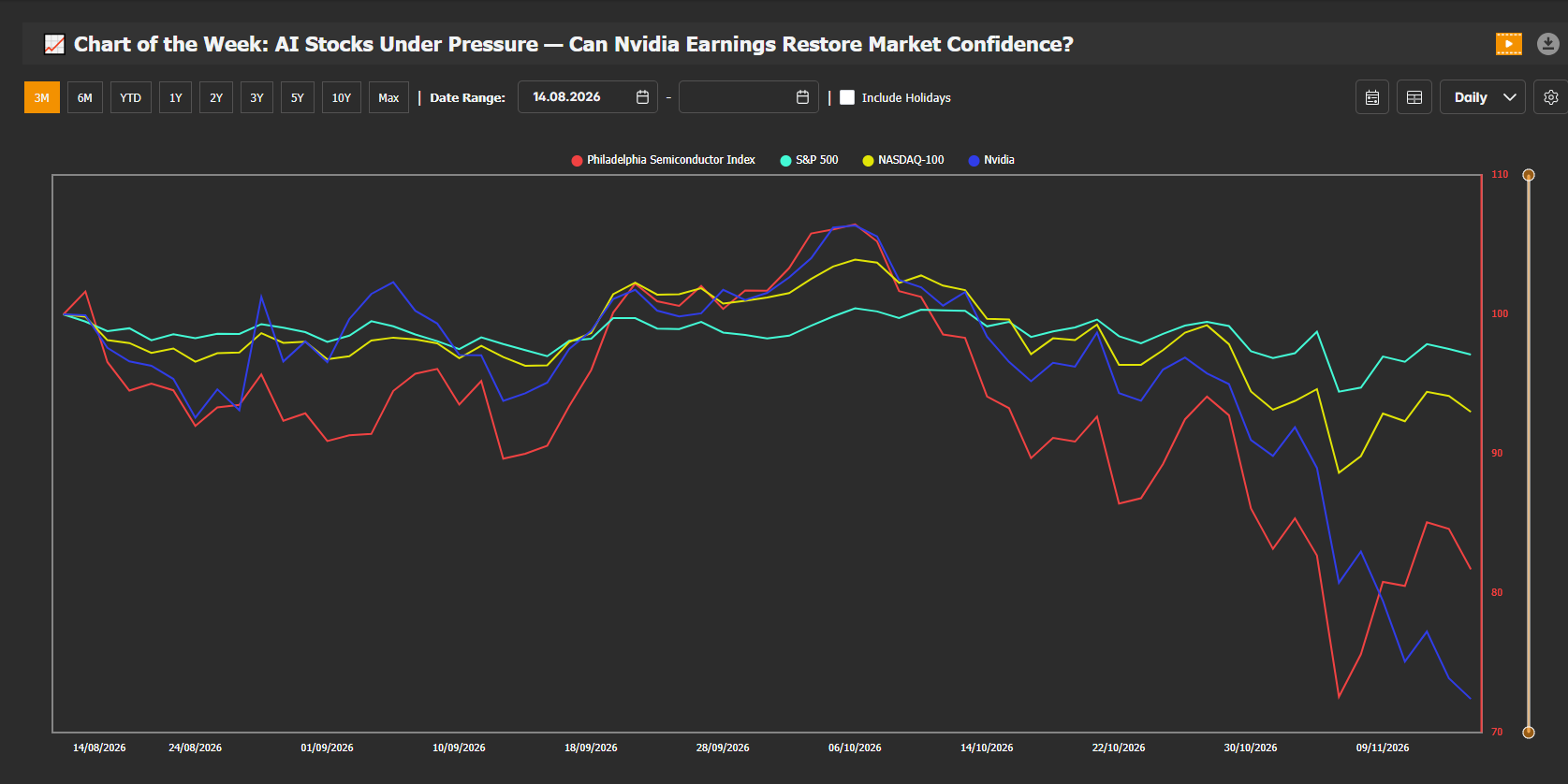
AI-related equities have experienced a notable reversal in recent weeks, with semiconductor stocks and Nvidia underperforming the broader U.S. market. After gaining momentum in late September and early October, the Philadelphia Semiconductor Index and Nvidia shares declined sharply, while the S&P 500 remained comparatively resilient.
Over the past three months, Nvidia shares have fallen approximately 28%, compared with an 18% decline in the Philadelphia Semiconductor Index and a more moderate 3% decrease in the S&P 500. This divergence highlights the uneven performance across U.S. equities and the heightened volatility in AI-related stocks.
Against this backdrop, Nvidia’s upcoming earnings report will provide further insight into demand for AI infrastructure, revenue growth and the outlook for the semiconductor industry. The results will also offer an opportunity to assess how company fundamentals compare with the expectations reflected in recent market movements.
Source: EquityRT | Data as of 13/11/2026